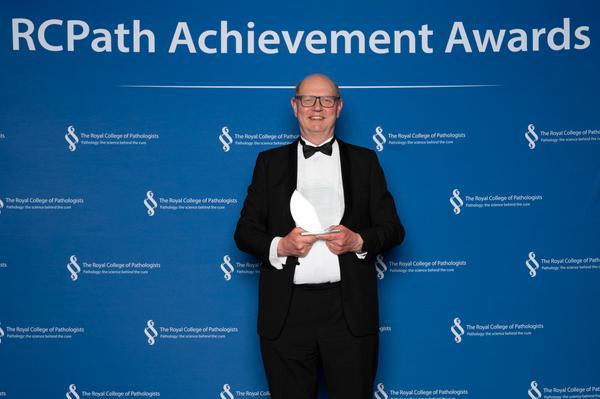
To celebrate excellence in pathology practice and promote high standards in pathology education, training and research to deliver the best patient care, the College established the RCPath Achievement Awards. These awards complement our existing schemes that celebrate public engagement and research.
There are 7 RCPath Achievement Awards – 4 team awards and 3 individual awards.
Congratulations to all the 2026 fantastic winners! You can read more about their work below.
Team awards
Team Award for Innovation, Technology or Development of AI – Sponsored by Roche Diagnostics

Peter Bankhead, Mark J Arends and the QuPath Team, University of Edinburgh
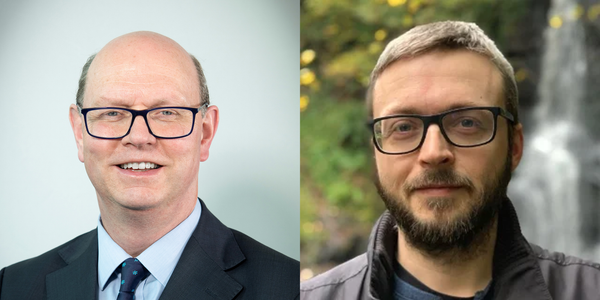
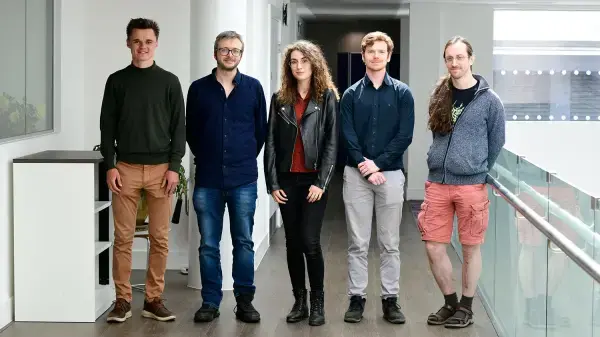
Dr Peter Bankhead is the creator and lead software expert behind QuPath, one of the world's most widely used image analysis platforms for digital pathology. He develops QuPath with his research group at the University of Edinburgh in collaboration with Professor Mark J Arends.
Since its launch, QuPath has been downloaded more than one million times worldwide and cited in over 6,000 journal articles. As an open-source platform, QuPath has made advanced image analysis and AI-powered tools freely accessible to support global research, helping to improve efficiency, reduce costs and raise standards for quantitative analysis in pathology.
Team Award for Partnership Working
National Blood Transfusion Committee (NBTC) and NHS Blood and Transplant (NHSBT) Partnership Team
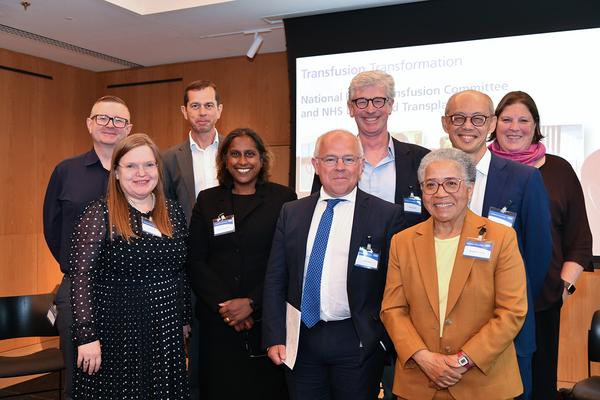
The National Blood Transfusion Committee and NHS Blood and Transplant partnership team
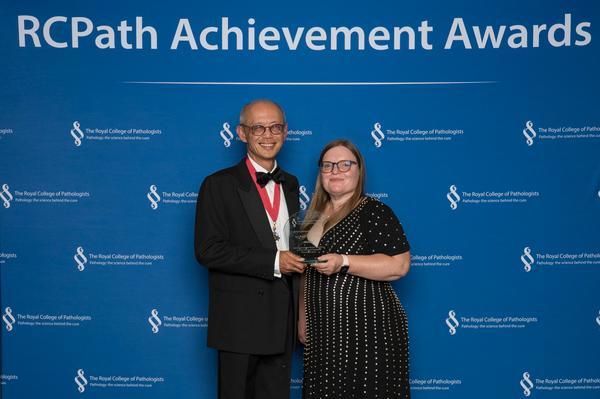
Professor Cheng-Hock Toh & Professor Lise Estcourt
A partnership between the National Blood Transfusion Committee and NHS Blood and Transplant has made blood transfusion safer and more efficient for NHS patients.
Together, they reduced blood use by 20%, saving 12,000 units of the rarest blood type and ending a national shortage. They improved the use of a drug that reduces bleeding in surgery, created England's first blood wastage database and launched a genomic matching programme to give patients with sickle cell disease better-matched, safer blood.
Team Award for Pathology Services – Sponsored by Epredia

Essex & Herts Air Ambulance (EHAAT) CPC Collaboration Team
-
Dr Ben Swift (Home Office Registered Forensic Pathologist)
-
Dr Gareth Grier (Consultant in Emergency Medicine and Pre-hospital Care, Associate Medical Director at EHAAT)
-
Mrs Suzie Robinson (Southey Academic Lead for Patient Experience and Outcomes at EHAAT)
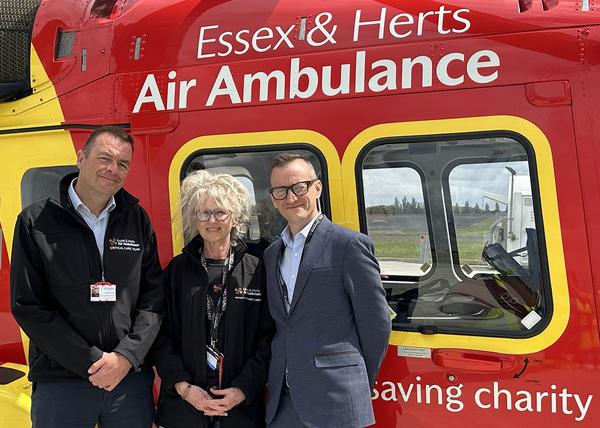
Dr Gareth Grier, Mrs Suzie Robinson and Dr Ben Swift
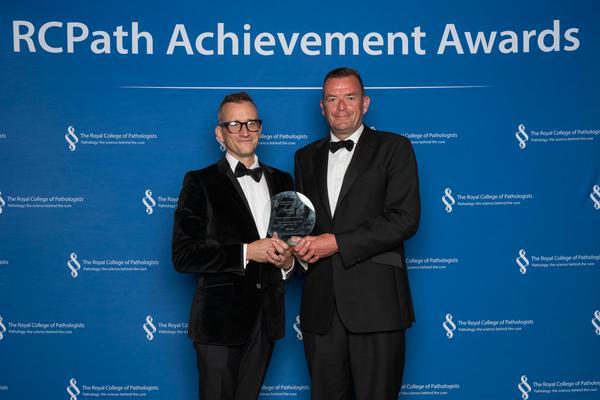
Dr Ben Swift and Dr Gareth Grier
A pioneering collaboration at Essex & Herts Air Ambulance (EHAAT) is changing how emergency services learn from patient deaths by integrating forensic pathology expertise into clinical governance and education. Voluntarily led by a forensic pathologist and supported by senior coroners, the initiative has transformed on the scene care by delivering pathology-focused clinicopathological correlation (CPC) meetings that bring together autopsy findings and clinical reflection to improve future patient care.
The CPC meetings are attended by pre-hospital doctors, paramedics, students and aftercare teams, creating a multidisciplinary environment for collaborative learning and continuous improvement. Through detailed discussion of clinical diagnoses alongside autopsy findings, the programme has strengthened understanding across teams whilst also promoting the role and value of pathology in emergency medicine and pre-hospital care.
Team Award for Sustainability – Sponsored by Source LDPath
Histopathology and East Genomics, Cambridge University Hospitals
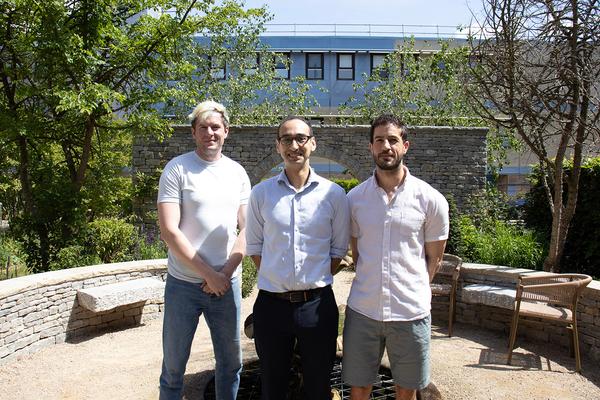
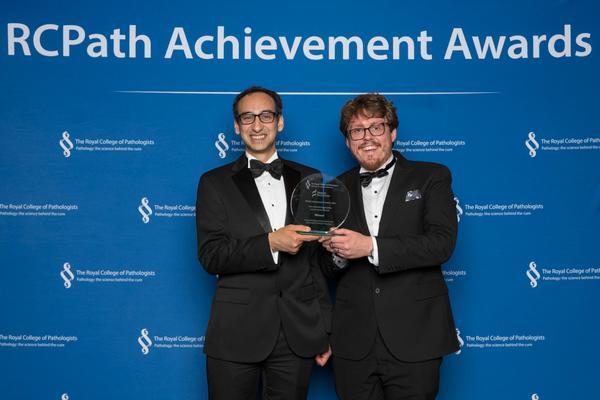
Designed to be scalable and replicable across the NHS, CUH Histopathology and East Genomics have delivered an innovative sustainability initiative that is transforming how molecular tumour samples are handled for whole-genome sequencing across the NHS Genomic Medicine Service. Through the introduction of a room temperature sample-stabiliser, their innovative sustainability initiative introduces a room-temperature sample stabiliser, removing the need for dry ice and urgent courier logistics. This has created a more sustainable, accessible and scalable approach to molecular sample transport.
Importantly, the initiative has improved access to whole-genome sequencing for patients at remote and referring hospitals by allowing samples to be collected and shipped alongside other routine pathology samples.
This practical and measurable project demonstrates how pathology-led innovation can successfully combine environmental sustainability, operational improvement and clear patient benefit.
Individual awards
Leadership Award
Dr David Adams, Senior Group Leader and Interim Head of The Somatic Genomics Programme (SGP), Wellcome Sanger Institute
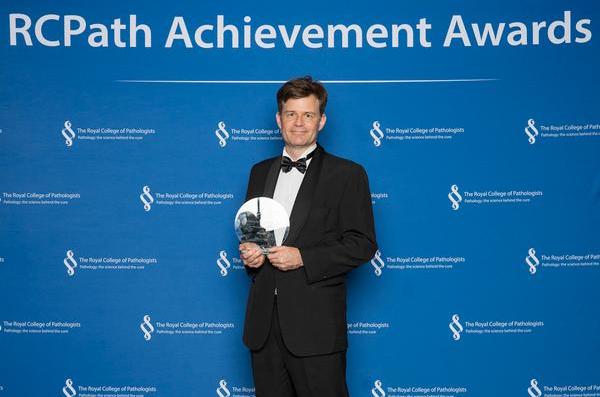
Dr David Adams leads a research programme focused on understanding the genetic causes of cancer. As senior group leader and interim head of the Somatic Genomics Programme at the Wellcome Sanger Institute, he provides strategic leadership across a division of over 200 staff.
Dr Adams has authored over 400 publications. His research has made important contributions to cancer genetics, including discovering genes that increase the risk of inherited skin cancer, and developing new tools that allow scientists to test the effects of genetic mutations. Dr Adam’s work is reshaping how we define cancer risk and find new targets for treatment.
He has also developed the next generation of scientific leaders, supervising over 40 PhD students and postdoctoral fellows, many now holding senior positions in academia, medicine, and industry. His research has attracted support from major funders including Wellcome, Cancer Research UK, and AstraZeneca.
Trainee Award
Dr Richard Yates, ST4 in Histopathology, Royal Free London NHS Foundation Trust
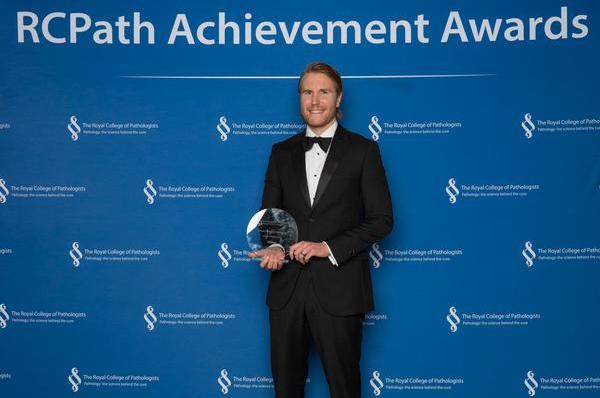
Dr Yates analysed over 1.7 million formaldehyde airborne monitoring results across 117 NHS departments between 2024 and 2025. His data unequivocally shows that formaldehyde exposure is inadequately controlled in most NHS pathology departments. Dr Yates has independently lobbied the Department of Work and Pensions, the Health and Safety Executive (HSE), Scotland’s Chief Scientific Advisor, and Members of Parliament and the House of Lords.
His findings have elevated the profile of the pathology workforce via media reporting in The Independent and Channel 4 News. His advocacy has also led the HSE to agree to raise awareness of appropriate formaldehyde management, create a compliance case study, and provide clearer information to NHS Trusts.
He has also secured a commitment from the RCPath President to establish a Working Group to advocate for higher standards of occupational hygiene across UK pathology departments.
Dr Yates his research has been covered by BMJ: Under the microscope: formaldehyde exposure in National Health Service pathology departments in the United Kingdom.
Trainer of the Year
Dr Marina Morgan, Consultant in Medical Microbiology and Infection, Royal Devon & Exeter Foundation NHS Trust
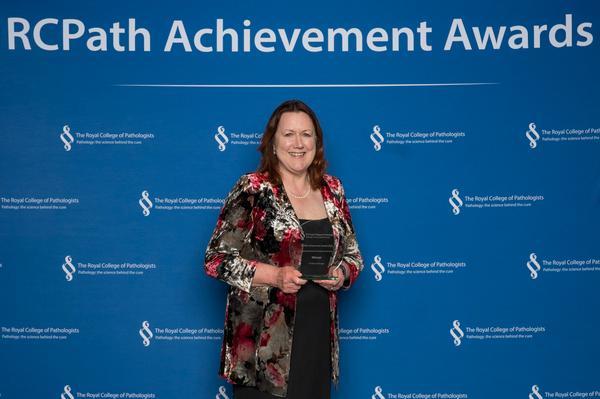
Infection specialities are experiencing a crisis in workforce and succession planning, with hospitals struggling to fill consultant posts across the UK. Dr Morgan encourages trainees to consider infection training as a career, organising and delivering a number of activities to promote infection specialties to trainees and foundation doctors.
Dr Morgan teaches nurses, medical students, biomedical scientists, clinical scientists, physician associates and doctors at local, regional, and national levels. She developed a successful Work Experience Programme introducing prospective medical students to clinical and laboratory practice - one former student is now an infection consultant.
She is a RCPath Examiner, an educational and clinical supervisor, and contributed to developing a GP with Special Interest (GPSI) training curriculum.
From 2010 to 2025, Dr Morgan served as South-West Training Programme Director for Medical Microbiology, overseeing specialist training across the region and delivering remedial training for doctors in difficulty.
Highly commended
Individual awards
Leadership Award
- Professor Mary Noelle Sheppard
Trainee Award
- Dr Cassim Akhoon
- Dr Matthew Waite
Trainer of the Year Award
- Dr Suryabrata Banerjee
- Dr Samir Dervisevic
Team awards
Partnership Working
- British Association of Gynaecological Pathologists
- London Undergraduate Pathology Network
- North West Genomic Laboratory Hub (NWGLH) / Manchester Centre for Genomic Medicine
Pathology Services Award
- Blood Culture Pathway multidisciplinary team at Northumbria Healthcare NHS Foundation Trust
Sustainability Award
- The Microbiology Greens (The MGs) at Lancashire Teaching Hospitals
- Green Champions, The Association for Laboratory Medicine
Innovation, Technology or Development of AI
- North West Anglia FT Cellular Pathology Department
- Synnovis AI
- Synnovis Genomics
Author(s)
