
Viruses and Vaccines, a new set of resources to stimulate discussion and improve understanding of the vital role vaccines have in preventing disease and improving public health, has been launched by the Royal College of Pathologists today to mark the start of British Science Week 2021.
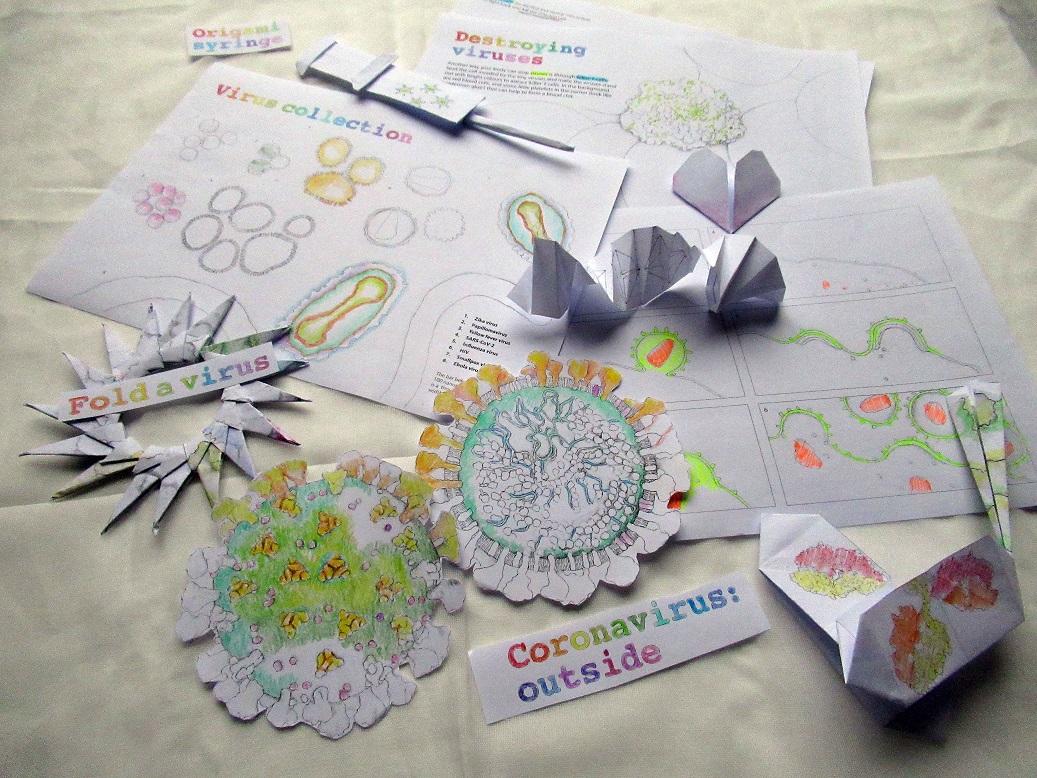
Combining art and science, Viruses and Vaccines is a set of free online activities and resources designed to be fun and engaging for people of all ages. Participants will be encouraged to be creative with colouring and origami, while hearing from pathologists about their vital work.
Developed by immunologists, virologists and microbiologists in collaboration with public engagement consultants, the resources have been created to be easy to access and use. There is also a Viruses and Vaccines playlist on the College's YouTube channel, with videos made by Dr Lizzie Burns, the science-based artist who created many of the new resources.
Dr Mike Osborn, President of The Royal College of Pathologists, said:
‘The COVID-19 pandemic has led to the largest vaccination programme in NHS history. The College and the wider healthcare community have a crucial role in building public confidence in vaccination. With a focus on COVID-19 vaccines and the role of pathology during the pandemic, Viruses and vaccines sets out to engage and inform, helping to dispel many common myths and misconceptions.’Launched as part of British Science Week (5–14 March 2021), the resources will accompany online events where families, as well as school and university students, will have the opportunity to hear from pathologists and have their questions answered.
Professor Will Irving, College Fellow and Professor of Virology, University of Nottingham, said:
`Tackling over 20 life-threatening diseases, vaccines save millions of lives globally every year. Life-saving vaccines are the result of the painstaking research, commitment and hard work of pathologists and scientists from around the world, never more so than in the development of the COVID-19 vaccines. Viruses and vaccines tells the story of why and how vaccines are created, and how they work to protect all of us from disease and ill health.’
Katherine Mathieson, Chief Executive, British Science Association, said:
`We recognise that many people have concerns and questions about the COVID vaccines and we welcome the work being done to respond to them by the Royal College of Pathologists and its members. ‘Viruses and Vaccines’ will be an enormously useful resource for communities, families, teachers, researchers and many others during British Science Week 2021 and beyond.’
Alongside the resources, the College is also running a number of online events over the next couple of weeks, some of which are part of British Science Week. All of the events will involve College members who are volunteering their time to help facilitate and to answer questions.
The online 'Viruses and Vaccines' events are all free to attend; booking is essential:
- Online school discussion workshop on 10 March
- Online art-science workshop for families on 13 March
- Online discussion workshop for undergraduates studying relevant courses on 18 March
All are welcome at the art-science workshop and we're grateful for any support in spreading the word to students about the two discussion events.
The creative minds behind the Viruses and Vaccines resources are science-based artist, Dr Lizzie Burns, and public engagement consultant, Dr Sai Pathmanathan. The public engagement team are extremely grateful to them both and to the many RCPath members who have given so much of their time reviewing resources and helping to interpret the science for a diverse public audience.
Author(s)
