
8 March celebrates International Women’s Day (IWD), an annual event the College has proudly supported for many years. Since the day was first marked in 1911, IWD has grown into a global movement, championing the advancement, achievements, and voices of women everywhere.
Although the world has changed radically over the past century, many of the challenges affecting women’s progress still remain. Since its foundation, IWD has belonged to everyone who believes in gender equality, encouraging us to celebrate women’s achievements, raise awareness of discrimination, and take meaningful steps toward gender parity.
International Women's Day 2026 Theme: Give to Gain
This year’s theme, #GiveToGain highlights a powerful idea: when we give, we all gain. The campaign encourages a mindset of generosity, collaboration, and reciprocity. By giving intentionally, whether as individuals, organisations, or communities, we create more opportunities for women to thrive.
Contributing to women’s advancement can take many forms: knowledge-sharing, mentoring, professional development, education, advocacy, visibility, or simply time. Each act of support helps build a more inclusive, connected, and equitable world.
Upholding this year’s theme, #GiveToGain, we spotlight conversations with our International Regional Advisor for the Americas, Professor Medhat Askar, and his supervisor, Dr Malak AlThgafi. This demonstrates the importance of collaboration between female and male colleagues in advancing pathology and strengthening our global community.
Professor AlThgafi recruited Professor Askar to join the team at Tufts Medical Centre in 2025 where she serves as Chair of the Department of Pathology and Laboratory Medicine. Professor Askar is Vice Chair of the Department for Faculty Development and Engagement and Director of the HLA and Transplantation Laboratory.
Professor Medhat Askar
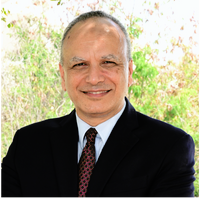
1. What does International Women's Day mean to you personally, and why is collaboration between female and male colleagues important in pathology?
International Women's Day is a call to action to recognise the contribution of women and creating a more equitable world. In pathology, diverse perspectives are essential. When men and women work together as equals, we create a more dynamic and innovative environment that leads to better patient outcomes.
2. This year's theme focuses on `Give To Gain’, how does that resonate with your experience working with colleagues in your department?
‘Give To Gain’ perfectly encapsulates my experience with Dr Malak AlThgafi. She has created a culture of mentorship where knowledge is shared freely, and everyone is empowered to contribute their best work. By leveraging my lifetime experiences of working in a number of organisations across 3 countries on 3 continents in diverse fields including laboratory medicine, transplantation, cell and gene therapy, global health, health professions education and higher education administration, I feel I am equipped to support her ambition for the department and our work. Working closely with Malak, I have gained invaluable experience and have been part of a team making a real impact on pathology and healthcare at large.
3. Can you share how you first met Professor Malak AlThgafi and how you have worked together?
Professor AlThgafi recruited me to join her team. I was immediately impressed by her vision for the department and her passion for advancing pathology. As her direct report, I work closely with her on initiatives from implementing new diagnostic technologies to developing educational programs for residents and fellows.
4. In what ways have you supported Dr AlThgafi's professional development or career progression?
My role is twofold as the Medical Director of the HLA and Transplantation Laboratory and the Vice Chair of the Department for Faculty Development and Engagement. I am committed to support Dr AlThgafi's vision by ensuring our department has the resources and infrastructure needed to achieve her ambitious goals, including establishing a world class Immunogenetics and Transplantation Laboratory that is among the most advanced in the world and which provides support for all of the faculty.
5. What lessesons have you learned from have you learned about leadership through supporting Professor Malak AlThgafi?
Working with Professor AlThgafi has taught me that true leadership is about empowering others and creating an environment where everyone feels valued. Her dedication to mentorship and unwavering commitment to excellence inspire us all. I strive to be a supportive colleague, providing practical solutions when challenges arise.
6. How do you plan to continue your own commitment to “Give To Gain” beyond IWD 2026?
Organisations must commit and work to create pathways for women to advance into leadership roles through mentorship, flexible work arrangements, and aiming to tackle unconscious bias. I am committed to being a lifelong ally, continuing to support Dr. AlThgafi's vision and actively mentoring other women in their careers particularly in my role as the Vice Chair of the Department for Faculty Development and Engagement.
Professor Malak AlThgafi
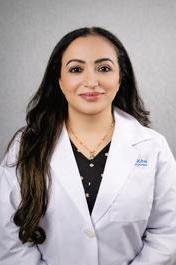
1. What does International Women’s Day mean to you personally?
International Women’s Day is not symbolic for me. It is deeply personal. It represents resilience, reinvention, and responsibility. I have built my career across countries, cultures, and systems. I have led in environments where women, particularly in science and medicine, were not always expected to lead at the highest levels. Every position I hold today carries weight, not just for me, but for the women watching.To me, this day is a reminder that leadership is not only about achievement. It is about legacy.
2. Why do you feel it’s important for colleagues to promote inclusivity and equity. How has Medhat shown that in pathology?
Equity is not about fairness in theory. It is about building systems where talent rises without unnecessary friction. Pathology is a precision specialty. It requires intellectual diversity, operational discipline, and psychological safety. When people feel valued, they perform better. When they perform better, patients benefit.
Medhat demonstrates inclusivity in practical ways. He builds infrastructure that supports others. He reinforces transparent processes. He invests in faculty development. He does not see leadership as positional authority, but as shared stewardship. That kind of partnership strengthens the department structurally, not just culturally.
3, How does this year’s theme, ‘Give To Gain,’ resonate with your experience in your career?
This theme defines how I lead. I give vision, autonomy, opportunity, and high expectations. In return, I gain innovation, loyalty, excellence, and collective success. When I recruit leaders, I invest in them fully. When I mentor trainees, I expect them to rise. When I build programs, I design them to outgrow me. Giving is not sacrifice. It is strategy.
4, Can you share how you first met Medhat and what stood out to you about his approach to collaboration, leadership, or mentorship?
During recruitment, I was not just looking for technical expertise, I was looking for someone who could think in systems. Medhat stood out because he understood scale, he understood governance, laboratory excellence, faculty engagement, and global context. This is what we wanted at the Tufts Medical Centre. He approached conversations with alignment around impact, not just role description, that alignment matters. Departments are not built on talent alone, they are built on shared vision.
5. In what ways has Medhat’s support helped your professional development or progression within pathology?
Strong chairs need strong vice chairs. Sustainable leadership is never solitary. His operational leadership in immunogenetics and faculty development allows me to focus on expansion, strategy, partnerships, and long-term growth. That kind of collaboration amplifies what is possible. It reinforces that modern academic leadership is about building leadership around you.
6. Have there been specific barriers or challenges in your career where the allyship between you and Medhat has made a meaningful difference? Has there been a time when his support helped you navigate or overcome those moments?
Leadership at scale always involves complexity, financial pressure, negotiation, and institutional politics. In those moments, allyship is not theoretical. It is visible in how people stand with you in rooms that matter. It is visible in alignment, in preparation, in shared accountability. Having colleagues who reinforce mission and remain solutions focused on pressure is invaluable. That is real allyship.
7. In the spirit of this year’s theme, ‘Give To Gain,’ how do you support and uplift colleagues or trainees within pathology, and how has giving support to others shaped your own growth or perspective in the profession?
I am intentional about sponsorship, not just mentorship. I create leadership pathways. I advocate for promotion. I build laboratories and programs that generate opportunities for others to lead. I give visibility. I give honest feedback. I give responsibility early. Supporting women and trainees is especially meaningful to me. I understand the invisible barriers. When we normalise excellence from diverse leaders, we shift culture. Giving has sharpened my leadership. It has made me more strategic, more empathetic, and more disciplined.
8. What do you hope the future of allyship, and gender equality looks like in pathology?
I want structural equity, not performative inclusion. Equitable compensation. transparent promotion metrics and leadership representation that reflects talent. Intentional sponsorship is embedded into governance. I want young women entering pathology to see leadership as an expectation, not an exception. And I want allyship to be normal, operational, and measurable. That is the future worth building.
Author(s)
