
Craving change, Dr Rebecca Allen and her family decided to move to Australia in search of new adventures and learning opportunities. Taking the OOPC enabled Rebecca to spend 2 years working at the University of Tasmania as a Senior Lecturer in Pathology. In this blog, Dr Allen reflects on her role as an educator and what she gained from the experience of teaching pathology abroad.
To the ends of the earth and back again: pathology teaching in Tasmania, Australia
By Dr Rebecca Allen, ST4 Histopathology, University Hospital Southampton
In search of adventure
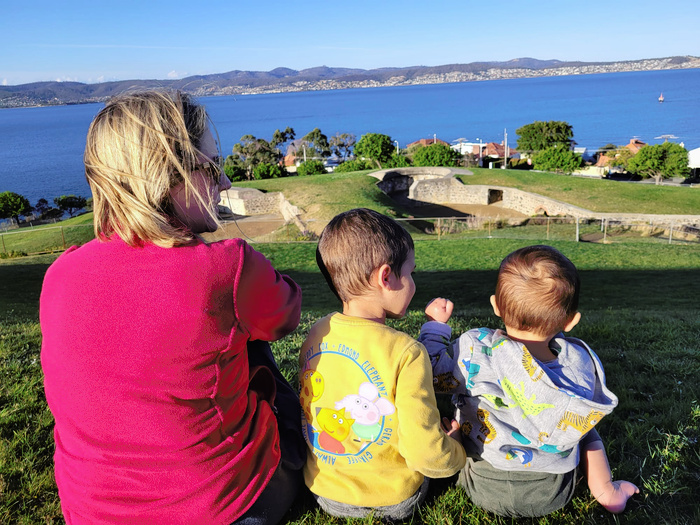
We wanted a break. A pause from everyday monotony, and the unrelenting pressures of the NHS, the deadlines and the steady march through training. So, we did something bold. Together with my husband (a senior trainee in anaesthesia and intensive care medicine) and our 2 little boys, we packed up our lives in the UK and set off in search of adventure.
The other side of the world wasn’t quite far enough for us. The very bottom of the world, however, seemed just right.
Taking an OOPC is becoming increasingly common among trainees, but I’ve yet to meet another histopathology trainee who spent 2 years abroad during this time.
I arrived in Tasmania as an educator − ready to teach, deliver and share the fundamentals of pathology. Yet, as so often happens, the teacher became the student. I learnt about Tasmania’s unique identity as an island state, and the deep-rooted Aboriginal history and culture that is woven through the curriculum.
Teaching in Tasmania
In Hobart, I was lucky enough to land my dream role as a Senior Lecturer in Pathology at the University of Tasmania (UTAS). It was my first official role as an educator, with responsibilities for timetabling, lecturing, leading tutorials and supporting the assessment process, from writing and marking exam questions to standard setting.
I arrived in Tasmania as an educator − ready to teach, deliver and share the fundamentals of pathology. Yet, as so often happens, the teacher became the student. I learnt about Tasmania’s unique identity as an island state, and the deep-rooted Aboriginal history and culture that is woven through the curriculum.
A major goal of my teaching was to challenge the common misconception (that I certainly remember from my medical school days) that pathology is a dry, slow-paced aspect of medicine. However, pathology is medicine. I saw this role as an opportunity to address this by delivering content in an engaging and relevant way. Being part of the “medical student journey” during such a formative stage of their lives was a privilege. Medical school shapes you forever. Lecturers – both good and bad – stay with you, and to be a part of that was humbling and slightly daunting.
A key perk of my role was access to the UTAS pathology museum − home to an extensive collection of preserved specimens showcasing diverse pathologies. I ran weekly tutorial sessions there, carefully selecting specimens that would reinforce key concepts that I delivered in lectures the week before. Such topics included cellular adaptation, inflammation, cancer and system-based pathology.
My tutorials encouraged students to develop their observational skills, discuss findings and practise clinical reasoning by linking pathological changes to symptoms, diagnostic tests and patient care. My aim was to highlight key messages that went beyond textbook facts. I often used clinical anecdotes from my time as a registrar in general internal medicine to bring pathology to life.
I also developed a ‘pot drawing challenge’ where students sketched a covered pathology pot using only their partner’s verbal description. This promoted active learning and peer interaction, strengthening their communication and descriptive skills, both of which are essential in all aspects of medicine.
The feedback was overwhelmingly positive. There is no substitute for experiencing pathology directly in front of you. A preserved specimen offers far greater educational value than any plastic model, textbook diagram or Google image ever could.
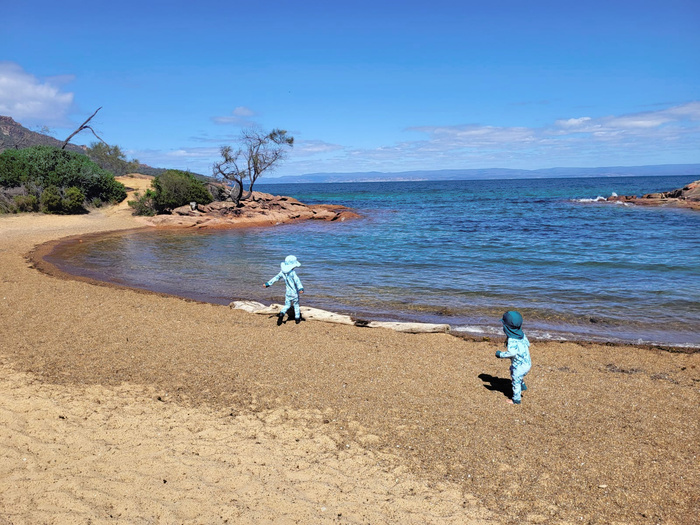
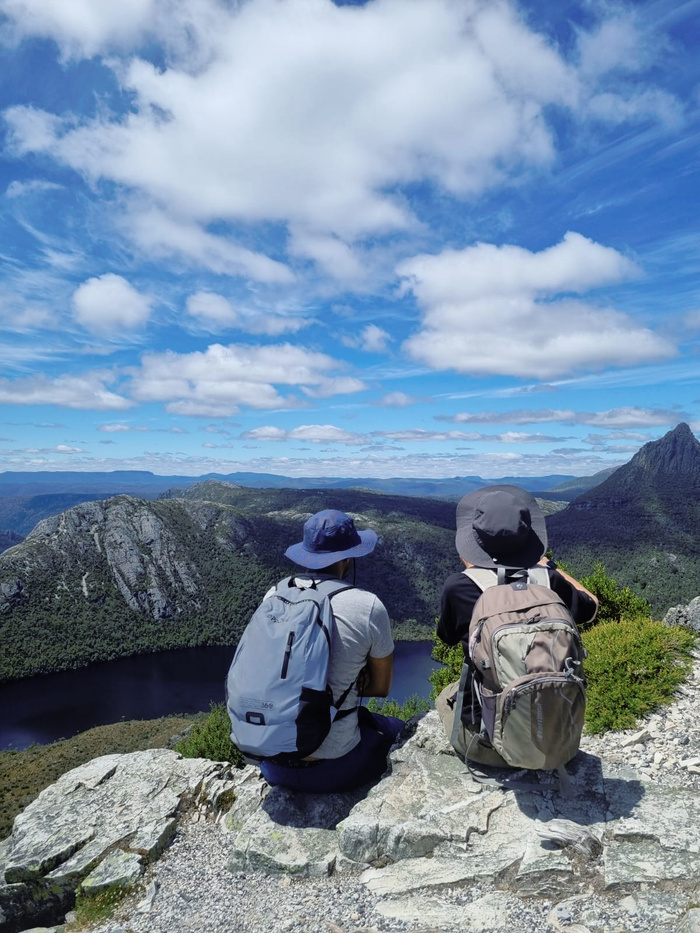
Beyond the lecture theatres, there was Tasmania itself: wild, raw and breathtakingly beautiful. Mountains, beaches and forests framed our days, alive with colourful birdsong and the constant, curious presence of marsupials.
There is no substitute for experiencing pathology directly in front of you. A preserved specimen offers far greater educational value than any plastic model, textbook diagram or Google image ever could.
Reflections
We rarely get the chance in life to start afresh, to reinvent ourselves or to build something entirely new. In Hobart, knowing no one there, we threw ourselves into every opportunity to make new connections, and slowly we created a community from scratch.
Looking back, that time gave me far more than professional development, it gave me perspective. It reminded me that change, while daunting, is often necessary for personal growth. I know how fortunate I am to have had this opportunity, and I don’t take it for granted. Not everyone can press pause, uproot their lives and take a leap of faith into the unknown. But if you are lucky enough to do so, it can strip away the noise of training and daily pressures, and help you rediscover the bigger picture.
For that, I will always remain grateful – to Tasmania, to the friends we made along the way and to the teaching experience that shaped me into a more reflective educator and a well-rounded pathologist.
Now, back in the UK with the final stages of training to complete and new challenges ahead, I carry that perspective with me.
The College offers guidance to trainees on taking an OOPC. If you are interested and would like to talk through your options, please contact the Training team.
We are always looking for ways to showcase the fantastic work of our members. If you have a story to tell, or an idea for a blog, we’d love to hear from you.
Author(s)
