
Would you like to start by introducing yourself and sharing some information about your background in pathology?
I’m a consultant in histopathology and solid tumour molecular pathology at Cambridge University Hospitals (CUH), and Molecular Pathology Clinical Lead for the East Genomics Laboratory Hub. I help turn tumour samples into diagnoses and genomic results that clinicians can use.
I came to CUH as a trainee in 2014 after completing a combined medical degree and PhD at Imperial College London. My training has always sat between clinical medicine, laboratory science, and research. In routine practice, I report endocrine, head and neck pathology and genomic testing for solid tumours.
At the University of Cambridge, I am an Assistant Research Professor and use genomic and single cell methods to learn as much as possible from precious human tissue. I also teach medical students about the wonderful world of pathology.
Pathologists are often out of sight, but we sit at the centre of patient care. Every sample belongs to a person waiting for an answer, and the quality of that answer shapes what happens next. What I enjoy most is bringing the microscope, molecular testing and clinical context together to make that answer as accurate and useful as possible.
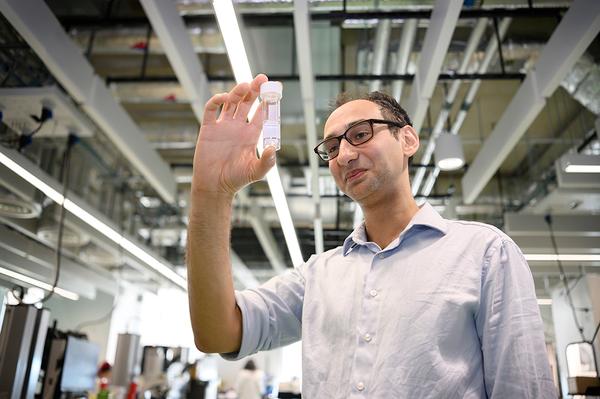
Pathologists are often out of sight, but we sit at the centre of patient care.
How would you describe an average week in your role?
There is no entirely average week, but it has a few reliable ingredients. Part of it is diagnostic: examining tissue under the microscope, reviewing molecular results and bringing the two together for people with cancer. I specialise in endocrine, head and neck pathology, as well as solid tumour molecular pathology, so the cases are often complex and benefit from discussion with surgeons, oncologists, radiologists, clinical scientists and other pathologists.
As Molecular Pathology Clinical Lead for East Genomics, I also work on the systems around each result. That includes quality assurance, resolving difficult cases, introducing new tests and improving how hospitals across the region access genomic testing.
The room temperature sample pathway grew out of that part of the job: noticing that a technically excellent test was being limited by the way samples reached us.
Alongside the NHS work, I undertake research at the University of Cambridge and teach pre-clinical medical students. The mixture is one of the best things about the role. A problem seen in routine service can become a research question, and an idea from research can, after proper testing, become a better clinical service.
Climate change is already a health problem as well as an environmental one. It affects patients, hospital buildings, supply chains and the cost of delivering care. In pathology, sustainability cannot mean compromising diagnostic quality. It means designing a better pathway: one that uses fewer resources, costs less to run, is workable for staff and remains safe for patients.
Can you describe the hospital’s aims for sustainability and why it is important to focus on them?
CUH’s Green Plan aims to halve the Trust’s direct carbon emissions by 2032 and progressively reduce the pollution, waste and loss of natural resources associated with healthcare. The practical shift is away from a “take, make, use and dispose” model and towards reducing consumption, reusing and repairing where possible, recycling well and moving to renewable energy.
Climate change is already a health problem as well as an environmental one. It affects patients, hospital buildings, supply chains and the cost of delivering care. In pathology, sustainability cannot mean compromising diagnostic quality. It means designing a better pathway: one that uses fewer resources, costs less to run, is workable for staff and remains safe for patients.
What prompted the team to explore a different way of transporting tumour samples, and why was it important to reduce the use of dry ice?
The starting point was a mismatch between a very advanced test and a surprisingly fragile route into it. Whole genome sequencing reads the DNA in a person’s tumour and can inform diagnosis and treatment, particularly in complex or hard-to-treat cancers.
Under the previous pathway, fresh tumour tissue had to be frozen rapidly, often at −80 °C, packed in dry ice and moved by specialist courier while it remained frozen.
That worked if the operation happened in the right hospital, at the right time, with the right freezer, staff and courier available. It was much harder for hospitals without that infrastructure and for operations late at night or at weekends. Access to genomic testing could therefore depend on geography and timing rather than clinical need.
We asked whether freezing was scientifically necessary. A commercially available solution was already used to preserve nucleic acids at room temperature, but using it in a routine NHS cancer pathway required proper validation. Histopathology and genomics colleagues tested tissue handling, morphology, DNA quality and whole genome sequencing performance, then built the governance, training and quality controls around it.
The cold chain carried a cost in carbon and cash. It required freezer electricity, dry ice production, specialist packaging and urgent journeys. It also consumed staff time and made every sample a small logistical emergency. Removing that dependency offered a safer and more accessible service as well as an environmental gain.
What difference has this new approach made in practice, both for the environment and for the staff and hospitals involved in sending samples?
The immediate difference is that the clock is no longer ticking in the same way. A small tumour sample can be placed in a validated stabilising solution, kept at room temperature and sent to Cambridge through routine hospital transport rather than being rapidly frozen and kept on dry ice.
Hospitals no longer need the full cold chain infrastructure before they can offer the pathway, and sampling is practical at night and at weekends as well as during normal working hours.
The pathway launched across the East of England at the end of 2025 following rigorous testing and is now nationally accredited. It could enable up to 3 times as many cancer patients in the region to benefit from whole genome sequencing. The impact is that more patients can access the right test without their hospital or time of surgery becoming the deciding factor.
For staff, the change turns an urgent handover into a routine process. Prepared kits, clear instructions and ordinary transport reduce interruptions, pressure on on-call teams and the risk created by trying to coordinate several time critical steps.
For hospitals, it reduces reliance on ultra-low temperature freezers, dry ice and specialist couriers, with corresponding environmental and financial benefits.
My aim in molecular pathology is to bring genomic testing into routine cancer care so that it becomes part of a good diagnosis, not a specialist extra available only in ideal circumstances
Can you tell us some of the team’s main achievements?
The achievement I am proudest of is us collectively turning a technical possibility into a safe clinical service across a region. That required CUH Histopathology, East Genomics, quality teams, clinical colleagues and referring hospitals to solve their parts of the same problem together.
The team validated the pathway, showed that sequencing performance was comparable with the established frozen route, incorporated it into routine governance and training, and launched it across the East of England. The process is now nationally accredited and is expected to be adopted by other regions.
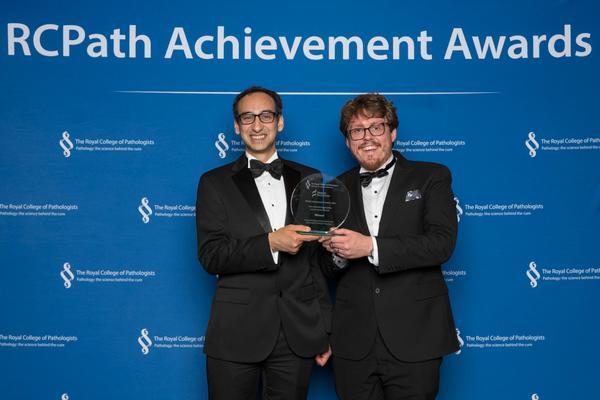
Receiving the 2026 RCPath Team Award for Sustainability was a lovely recognition of that collective work, particularly because the project connects environmental benefit with better access for patients and a more workable service for staff.
More broadly, my aim in molecular pathology is to bring genomic testing into routine cancer care so that it becomes part of a good diagnosis, not a specialist extra available only in ideal circumstances.
What are some challenges you and the team have faced?
The science and laboratory validation were not the hardest parts. The greater challenge was changing a pathway that crossed several services and organisations. Histopathology, genomics, surgery, quality teams, finance, transport and referring hospitals each held a different part of the process.
It took roughly 3 years to move from the idea to a regional service. We had to demonstrate that the new route protected sequencing quality, preserve diagnostic tissue separately, manage risks such as the wrong pot or incomplete labelling, train staff who may use the pathway infrequently, and make it work outside the hospital that developed it.
The experience taught me that persistence matters, but persistence should not be the operating model for every improvement. Well governed change needs a clear owner, early support across services and an agreed route through quality and operational decisions.
What advice would you give to someone who wants to work in histopathology or molecular pathology?
Spend time in a pathology laboratory if you can and follow a sample from the operating theatre to the final report. It is the best way to understand both the science and the responsibility.
You will see that pathology is a team effort involving biomedical scientists, clinical scientists, pathologists, genomic scientists and many others, with several different routes into the field.
Most importantly, remember that every specimen belongs to a person. If you enjoy solving difficult problems, working across disciplines and turning small pieces of tissue into answers that change care, pathology is a wonderful place to work.
Author(s)
