- Published:
- 20 July 2026
- Author:
- Dr Bernie Croal
- Read time:
- 7 Mins
A lot has happened in the political world since the last Bulletin was published in April. Andy Burnham will be the next Prime Minister of the UK, and so we must wait for news of his new ministerial team to understand the implications for healthcare policy. Meanwhile, healthcare delivery remains very challenging with no sign of significant improvements across the NHS. The latest waiting times figures for England show another rise – seasonally not unexpected for the month of May, but still in excess after adjustment.
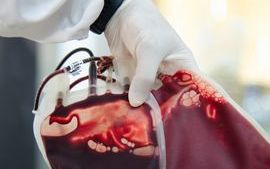
This edition of the Bulletin focuses on advances in transfusion and transplantation medicine, with many articles demonstrating the significant advances that have been achieved in detecting and treating numerous disorders and, in addition, advancing the science behind transplantation. The theme that consistently emerges is the case for medical haematology to be recognised as a distinct, clinically integrative specialty.
This review, led by Lord Patrick Carter and the Institute of Biomedical Science (IBMS), has been published. While the College welcomes the focus on pathology, it is unclear whether the findings and recommendations will be acted on by policymakers and funders. The focus on potential savings of £1.4 billion – if every pathology lab were to replicate those services that demonstrate high productivity benchmarks – is an issue that could offset awareness and commitment to the high levels of investment in technology and staffing that pathology needs now to avert continued service failure in the coming years.
I have no doubt that more integrated services – with improved interoperability with other services, the NHS and patients; with advanced automation, digital and AI being used to assist the pathologist, not replace them; and with a better way to fund services – is the future we need. However, with no strong mandate emerging and an implied reliance on very theoretical future savings based upon wild assumptions, imperfect data and unsafe modelling, it would seem unlikely that this alone will rapidly promote the level of change and progress that we desperately need across pathology services. Instead, it may trigger a level of reluctance to invest up front in pathology, especially when there is little in the way of new money available across the NHS and a never-ending list of services desperate for it.
The reality is that pathology services are increasingly failing. When pathology fails, healthcare fails. Histopathology services can of course be benchmarked on turnaround times, with current figures demonstrating a widening gap between what is achieved and what is desired by benchmarks such as those within the National Cancer Plan. The pressure to deliver this benchmark target and avoid fines in the future may lead to further outsourcing and an increasing drift towards private sector working that extracts more pathologist time from the inadequate pool of NHS consultant histopathologists. This would further endanger the critical mass of pathologists needed in many NHS services to deliver teaching, training, management and research activity, never mind the clinical service. We only need to look at how things have gone in paediatric and perinatal pathology, with ongoing pathologist shortages now leading to failure in the mutual aid system and a need to introduce a triage framework to deliver a service. So, we continue to offer the best service we can rather than the services we should.
The same is true for other pathology specialties that face similar pressures from rising demand on both laboratory and clinical services against a backdrop of inadequate numbers of pathologists and scientists, ageing equipment and buildings, and outdated IT systems with a lack of functionality and interoperability. This will mean the viability of many services will also be called into question.
It will be a College commitment to continue to lobby hard for fundamental change and investment in infrastructure, IT and workforce. This needs to happen up front, with central capital investment needed, given the state of NHS trust and health board finances. Similarly, we need proper workforce planning that assesses demand both now and in the future, and that sets out training for pathologists and scientists to meet that demand. These all seem like reasonable suggestions, but the reality is that they are not happening and the NHS is sleepwalking into a future whereby pathology services will fail to meet patient needs.
Only when this level of urgent resuscitation is made and services are robust, modern and stable, can we properly invest, assess and implement innovation, such as AI, to help boost productivity and efficiency.
I was glad to give evidence to this influential committee last month on behalf of the College, alongside the President of the Royal College of Radiologists, Dr Stephen Harden. Our joint response was consistent when asked why there had not been rapid deployment of AI across diagnostic services: inadequate staffing, poor IT support, ageing IT platforms, slow roll out of digital pathology and lack of funding to support AI products given their failure to demonstrate real savings in return.
It is rare that we get this opportunity at the highest political levels to highlight the real issues facing pathology. The committee members seemed surprised and frustrated but were keen to help and promote our suggestions. Our message was clear – investment in IT, improved interoperability, roll out of digital pathology, proper workforce planning and, only then, investment in AI across both image-based and automated platform services.
This year’s Volunteer’s Week took place on 1–5 June and we celebrated with blogs highlighting the work of our volunteers across a range of activities (e.g. exam writer, guideline author, sustainability lead, Portfolio Pathway panel, Chairs and members of Specialty Advisory Committees and other committees). Medical royal colleges do a huge amount of work that benefits doctors, scientists and the public, while supporting and providing vital healthcare services. Much of this can only be achieved by virtue of the army of volunteers who step up every year to support and deliver college activity. A huge thank you to you all.
Elections for 3 Vice-Presidents, Registrar and Treasurer are now open. These positions play a key role in supporting the profession, representing members and guiding the College’s work. So please take time to read candidates’ personal statements and CVs and make sure to use your vote.
We enjoyed welcoming College officers, directors, members, trainees, staff, political and media representatives, industry partners and colleagues from colleges, associations and kindred organisations to our annual dinner. This is an opportunity to recognise pathology. It was wonderful to see the winners of our 2026 RCPath Achievement Awards, which celebrate excellence in pathology practice and promote high standards in pathology education, training and research. A huge thanks to those helping to judge and sponsor the awards, but an even bigger congratulations to all the winners in what was a very competitive and tough field.
The College welcomes the agreement between the Government and the British Medical Association to resolve the resident doctors dispute in England. While no consultation involved the profession or the colleges, the offer of reimbursement for exam fees and membership costs was part of the agreement.
The detail around how this would work, what would be covered and who would be eligible remains unclear. What this agreement does define, however, is clear water between the package that resident doctors working in England can expect, versus that in the other three nations of the UK. This creates an uneven playing field, and the College is concerned that this will drive recruitment decisions and applications. All College exams will still be expected to be paid in full, as before, and will continue to be charged at a rate aligned to their cost. The College makes no profit from exams and strives to keep increases in line with inflation. We will continue to lobby for exam reimbursement for all UK-based pathologists and scientists.
Meet the author
-

Dr Bernie Croal
President, Royal College of Pathologists