
- Published:
- 21 October 2026
- Author:
- Professor Angharad Davies
- Read time:
- 3 Mins
Allergic disease is one of the most common chronic health conditions affecting the UK population, with rising prevalence across all age groups. Food allergy, drug allergy and atopic disease are routine features of clinical practice across primary, secondary and tertiary care. Yet, despite this growing burden, allergy services remain under-resourced and unevenly distributed within the NHS.
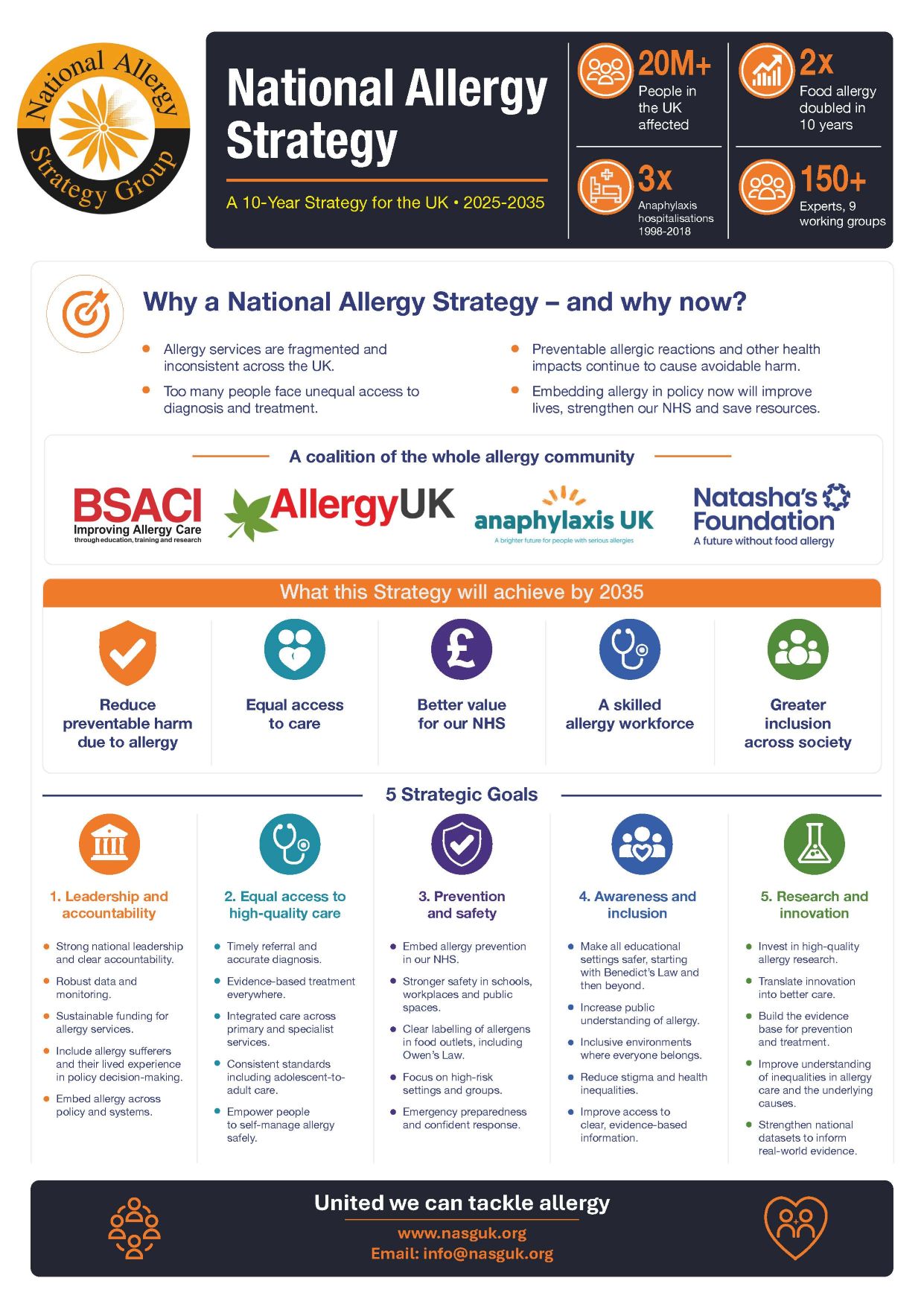
The publication of the National Allergy Strategy (NAS) in April this year reflects the fact that allergy is a major public health issue requiring coordinated national action (Figure 1). To mark the Strategy’s launch, in this issue of the Bulletin, we have gathered a collection of articles by experts from within and beyond the NAS authorship.
Professor Adam Fox, Chair of the NAS, explains why the UK needs a joined-up plan to reduce preventable harm, improve outcomes, tackle inequality and make everyday environments safer and more inclusive:
The NAS aims to deliver significant benefits to patients living with allergies, as well as the NHS and wider public services, through prevention, early intervention and more efficient use of resources, reducing preventable harm and addressing health inequalities.
The strategy outlines the key objectives and priority projects needed to improve health outcomes and other unmet needs of the allergy community across the UK.
The NAS sets out a bold, comprehensive plan achieved through 5 strategic goals:
- UK-wide leadership and governance
- equitable access to quality healthcare
- prevention strategies
- whole society awareness and engagement
- world-leading research.
Dr Adam Fox Chair of the NAS
Read more from Professor Fox in his featured article introducing the strategy.
Across the UK, access to specialist allergy services remains highly variable and patients frequently face long and difficult waiting times before receiving an accurate diagnosis. Dr Isabel Skypala and Dr Susan Leech emphasise the need for equitable access to allergy care, which requires adequate investment, service development in under-served geographies and a well-trained and staffed workforce, and Dr Nicola Jay has a pathology perspective on health inequalities in allergy.
The UK possesses world-leading expertise in allergy research, but translating scientific discovery into routine clinical benefit requires investment and coordination. Professor Jürgen Schwarze writes about the ambitious plan set out within the NAS to meet major research challenges. Dr Rashmeet Bhogal and colleagues Dr Abid Hussein and Professor Thirumala Krishna address the current hot topic of penicillin allergy and de-labelling, while Dr Micheal Perkin stresses the importance of prevention of allergic disease – as always, better than cure.
The ambitions of the NAS call for action from government, NHS organisations, professional bodies, patient groups and healthcare professionals. For the College, this is an opportunity to champion the critical contribution of immunology and laboratory medicine to allergy diagnosis, patient safety and service improvement; I am confident readers from all specialties will find something of interest and relevance in this article collection.
Versions of some articles are also published on BSACI’s ‘All About Allergy’ online resource.
Meet the author
-

Professor Angharad Davies
Clinical Director of Publishing and Engagement
Read next

A National Allergy Strategy: why the UK needs a joined-up plan
21 October 2026

The National Allergy Strategy: research and data
21 October 2026