
Congratulations to this year’s Paola Domizio Undergraduate Essay Prize winner, Chloe Edmonds. Chloe is a fourth year medical student at the University of Cambridge.
The essay question for this year’s prize was '300,000 different pathology tests are performed every working day across the UK. Write about an example that you have seen within your undergraduate training where one of these pathology tests had a significant impact or outcome for a patient.' The high number of entries that we received this year demonstrates that there is great interest in pathology among UK undergraduates.
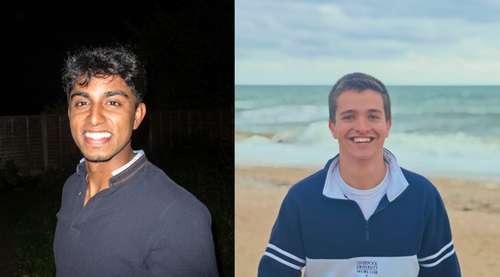
For the first time ever, the judges also decided to award joint second place, to Tarun Mathew Doss and Josiah Wilson. Tarun is studying medicine at the University of Manchester, and Josiah is a medical student at the University of Liverpool.
Thank you to everyone who took part in the competition and to the judges, Professor Angharad Davies, Dr Noha El Sakka and Dr Matthew Clarke, who had the difficult task of scoring all the brilliant essays and deciding on an overall winner.
“We chose a more personal topic this year, as we wanted entrants to reflect on how pathology helps patients, and the patient experience. There was an extremely high standard of entries this year, which made it hard to choose just 1 winner. Congratulations to everyone who entered.”
Dr Noha El Sakka, RCPath Vice President (Communications)
The Paola Domizio Undergraduate Essay Prize will reopen in early 2027. In the meantime, you can read Chloe’s winning essay, and the second place essays, on our competition webpage. Our Science Communication Prize, open to undergraduates, trainees and foundation doctors, is currently open.
We also run an essay prize for foundation doctors; the 2026 winner of the Hugh Platt Foundation Prize will be announced soon.
We asked our undergraduate winner, Chloe, a few questions about this year's prize.
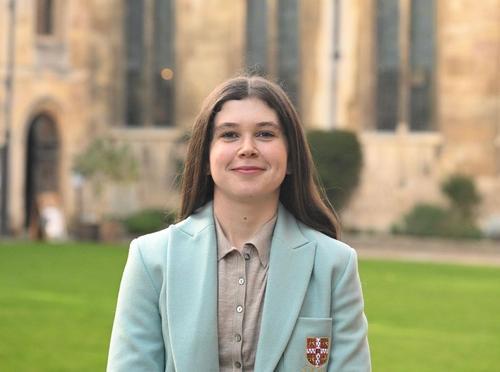
How do you feel about winning this year's Paola Domizio Essay Prize?
I feel incredibly honoured and grateful. What makes it particularly meaningful is that the essay was inspired by a patient I met during a clinical placement. The story stayed with me because it demonstrated how a single pathology result can completely transform our understanding of a person's life and illness. I'm very pleased that I was able to share that experience through my essay.
Why did you enter this essay competition?
I've always been fascinated by pathology and the mechanisms that underpin disease. When I saw the essay title, I immediately started thinking about whether there was a patient encounter that had particularly highlighted the importance of pathology testing. The patient I wrote about stayed with me because her diagnosis brought together genetics, neurology, musculoskeletal disease and family medicine in a way that was both scientifically fascinating and deeply human. It seemed to capture perfectly how pathology can influence not only diagnosis and treatment, but also the way patients and families understand their experiences.
What course and year are you currently studying and at which university?
I am a fourth-year medical student at the University of Cambridge.
What do you hope to do in the future?
I hope to pursue a career in academic Trauma and Orthopaedic Surgery. I am particularly interested in sports medicine, joint injuries, musculoskeletal disease and the biological factors that influence an individual's susceptibility to injury and long-term joint degeneration. Alongside clinical practice, I would like to continue undertaking research that helps us better understand disease mechanisms and develop strategies to improve long-term health, mobility and quality of life.
What do you like about pathology?
What I find most interesting about pathology is that it sits at the heart of almost every aspect of medicine. Pathology provides the bridge between the underlying biological processes of disease and the symptoms we see in patients. As someone interested in both clinical medicine and research, I think pathology offers a deeper understanding of why disease occurs. The patient described in my essay is a good example: what initially appeared to be an isolated stroke was ultimately explained by an underlying collagen disorder affecting multiple organ systems. Pathology helped reveal the bigger picture.
What would you say to students who are considering entering this competition?
I would encourage medical students to think about the patients they have met during their clinical placements. I truly believe that some of the most powerful stories in medicine come from ordinary clinic consultations and ward encounters. Patients are incredibly generous in sharing their experiences with us as students. Taking the time to understand both the science behind their condition and the personal impact it has had on their lives can be hugely rewarding. This competition is a wonderful opportunity to explore that connection between pathology, medicine and patient stories.
Author(s)
