
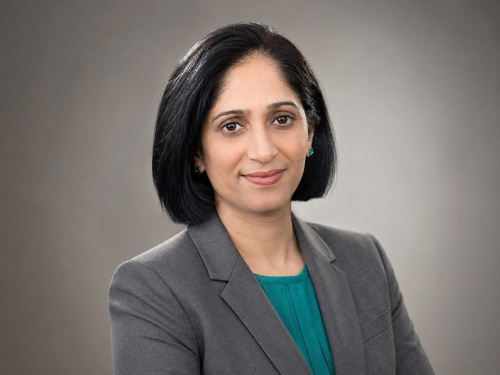
Today’s spotlight is on Dr Sonal Kulkarni, Consultant Histopathologist. Sonal acts as the College’s Portfolio Pathway (PP) Panel Co-Chair, alongside Dr Clair Evans. Both Dr Kulkarni and Dr Evans were recommended by Jenny Maginley, Training Manager at the College. Jenny said:
"As Portfolio Pathway (PP) Panel Co-Chairs, Dr Evans and Dr Kulkarni review all PP applications (including reviews and appeals) for their specialty. They ensure that the recommendations being made by College PP assessors are consistent and in line with the relevant College specialty specific guidance (SSG) and other legislation. There has been a large increase in PP applications, so these take a lot of time to review.
They also provide advice, support and assistance to the College’s Training team and to PP Assessors. This includes attending monthly virtual meetings to discuss applications, especially where there is disagreement or uncertainty. Clair and Sonal play a vital role in ensuring the maintenance of high professional standards in the pathology workforce entering the GMC Specialist Register via the PP route."
Can you tell us a bit about your background? What drew you to pathology (and specifically histopathology) as a profession?
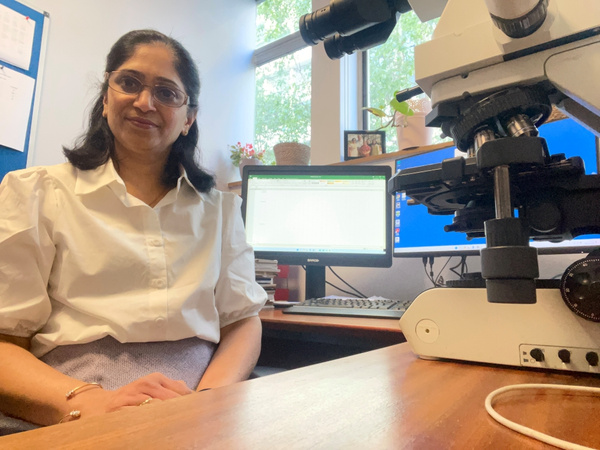
I have always loved drawing diagrams and been more fascinated by pictures and visuals than text. In the first year of my medical degree, histology became my favourite subject. As they say, a picture paints a thousand words, and I always liked the detailing of diagrams in histology and other subjects; it felt like my way of communication. We used to have histology as a separate subject in first year – ours wasn’t a case-based study, we learned it the old school way. Histopathology is based on the pathological aspect of histology, and it stayed my favourite subject as I moved into the second year. As we studied the details of medicine, it all started with pathological correlation, and I loved that pathology formed the very foundation of medicine.
You're currently a Portfolio Pathway (PP) Panel Co-Chair at RCPath. Can you tell us more about how you got involved and what this role entails?
I am an International Medical Graduate (IMG), and received my fellowship from the College through the FRCPath exams as an external candidate. I could not enter the UK-based postgraduate national training programme, so was unable to get a Certificate of Completion of Training (CCT).
To attain a substantive consultant position, the only way left was to go through the Portfolio Pathway (then called the Certificate of Eligibility for Specialist Registration [CESR]). It’s an extensive collection of evidence as per the College’s Specialty specific guidance (SSG). Once I had been through that process, I thought that I could use that knowledge to help and guide others, which led me towards becoming an assessor.
While on this journey, I got the opportunity to take up a co-chair position on the credentials panel alongside Dr Clair Evans. Together, we evaluate all the applications submitted under histopathology. The assessors and supporting team go through every application and prepare a robust evaluation form, which is then submitted to us. We make the final decision of signing off the application or request additional information when required.
How does this work benefit members and the wider profession?
This is a very important process for the wider community. Pathology, and especially histopathology, have suffered workforce shortages for a long time, which has put a lot of pressure on those in service – especially consultants. Over the last couple of years, the rate of international candidates taking FRCPath exams and applying through this route has increased significantly. It is vital for these candidates to get the guidance and proper channel to offer their services to pathology. As a co-chair I feel I am helping in some way to bridge this gap.
What do you enjoy about this work, and how has it benefited your professional development or practice?
The significant positive impact is the sense of satisfaction that I get from taking the opportunity to support the system in the best way I can. I also believe that the amount of time I spent learning this pathway process as an applicant is being utilised on a wider scale, which again is extremely satisfying.
What have been the positives of volunteering with the College, and what advice would you give to other members interested in getting involved?
The Training team has been tremendously supportive in carrying out this process of portfolio applications. They have taken on additional responsibilities to ease pressure on assessors which is very well appreciated. I would urge new members to join us in carrying out these assessments and enjoy the sense of belonging. This is also a great opportunity for networking and understanding the process behind the scenes. In that way, one is in a better position to support their colleagues at departmental and trust level.
What are your hopes for the future of histopathology?
I feel very hopeful that we will be able to beat the workforce shortage to some extent if we support qualified and experienced IMGs to get into the mainstream of histopathology. That would help ease pressure on the current substantive consultants.
Thank you to Dr Kulkarni, as well as Dr Clair Evans, for their support in facilitating the Portfolio Pathway at the College. If you’d like to get involved in this work, please get in touch with the Training team. There are also many other ways to get involved with our activities, and support us in delivering key services to pathology.
If you have any questions on our member spotlights, or have an idea for a blog you’d like to write, please get in touch with the Member Engagement and Support team.
Author(s)
