
Held annually on 5 June, World Environment Day is a global initiative led by the United Nations, encouraging awareness and action to protect the environment and promote a more sustainable future.
The College is committed to championing sustainability through delivery of our net zero and carbon reduction objectives. As part of our Volunteers’ Week series, and in recognition of World Environment Day, today’s spotlight focuses on a member who is helping to shape a more sustainable future for pathology and healthcare.
Dr Shireen Kassam is a Consultant Haematologist and the College’s inaugural Sustainability Lead for Pathology Practice. We spoke to her about her career in haematology, her passion for planetary health, and the important role pathology professionals can play in reducing the environmental impact of healthcare while continuing to deliver excellent patient care.

Can you tell us a bit about your background? What drew you to pathology (and specifically haematology) as a profession?
I am a Consultant Haematologist at King's College Hospital NHS Foundation Trust, where I specialise in laboratory diagnostics and lymphoma and histiocytic disorders. Alongside my clinical work, I have longstanding interests in medical education, public health and lifestyle medicine. I am also the founder and director of Plant-Based Health Professionals UK, a non-profit organisation that provides education and initiatives on whole food plant-based diets and lifestyle medicine.
What attracted me to pathology was its central role in patient care. Pathology underpins the vast majority of clinical decisions made across the NHS, providing the diagnostic information that enables accurate diagnosis, treatment selection and monitoring. As a haematologist, I have always enjoyed the combination of laboratory science and direct patient care, as well as the opportunity to translate advances in science into meaningful improvements in outcomes.
My interest in sustainability developed through recognising the close relationship between planetary health and human health. Climate change, pollution and biodiversity loss are already affecting health outcomes worldwide, and healthcare systems themselves contribute significantly to environmental impacts. I became increasingly interested in how we could deliver excellent patient care while reducing unnecessary waste, improving efficiency and minimising our environmental footprint. Importantly, many of the actions that support sustainability also improve patient care, making this an area where clinical quality and environmental responsibility can work hand in hand.
You are the College’s Sustainability Lead for Pathology Practice. What inspired you to take on this position, and what does the role entail?
I was inspired to take on the role because pathology has a unique opportunity to contribute to the NHS's sustainability ambitions. Diagnostic services sit at the heart of modern healthcare, influencing clinical decision-making across every specialty. This means that even relatively small improvements in pathology practice can have far-reaching benefits for patients, healthcare systems and the environment.
The role involves helping to embed sustainability principles throughout pathology practice and within the activities of the College. This includes raising awareness of the links between pathology and environmental sustainability, supporting the development of practical resources for members, promoting sustainable quality improvement initiatives, and ensuring that sustainability becomes an integral consideration in education, training, research and service delivery.
You wrote an article for the Bulletin in January 2025, highlighting the importance of sustainability in healthcare, and setting out your ambitions as Sustainability Lead. What have you been working on over the last year – are there any specific achievements or activities that you'd like to highlight?
One of the most significant achievements has been the development and launch of the Sustainable Pathology Practice Toolkit. This resource provides practical guidance for pathology professionals and organisations on reducing environmental impacts while maintaining high-quality patient care. It brings together evidence and actionable recommendations that can be applied across different pathology specialties and settings.
I have also focused on increasing awareness and engagement across the pathology community through educational activities, presentations at conferences and meetings and contributions to College publications. Alongside this, I’ve collaborated with colleagues across specialties, through the Academy of Medical Royal Colleges Intercollegiate Sustainability Group, to identify opportunities for sustainable practice.
In the 2025 Bulletin article, you introduced the 4 principles of sustainable healthcare: prevention, patient empowerment, lean pathways and low-carbon alternatives. Can you expand upon these, how they can be embedded into pathology services and how the College is supporting this?
These 4 principles provide a practical framework for delivering healthcare that is both environmentally sustainable and patient-centred:
- Prevention is perhaps the most powerful intervention. Preventing disease reduces suffering for patients and decreases demand on healthcare resources. While pathology is often associated with diagnosis, pathology professionals also contribute to prevention through screening programmes, early detection initiatives and supporting public health efforts.
- Patient empowerment involves providing patients with the information, skills and confidence to manage their own health. Better-informed patients often experience improved outcomes and may require fewer healthcare interventions. Across healthcare, empowering individuals to adopt healthier lifestyles can reduce the burden of chronic disease while delivering environmental co-benefits.
- Lean pathways focus on delivering the right care, at the right time, in the right setting. In pathology, this includes appropriate test requesting, reducing duplicate investigations, streamlining diagnostic pathways and eliminating low-value activity. These approaches improve efficiency and patient experience while reducing unnecessary resource use.
- Low-carbon alternatives encourage us to consider whether there are clinically equivalent options with lower environmental impacts. This may include changes in procurement, laboratory processes, energy use, digital technologies or service delivery models.
The College is supporting these principles by incorporating sustainability into education and training, developing guidance and standards, promoting research and quality improvement, and sharing examples of best practice from across the pathology community.
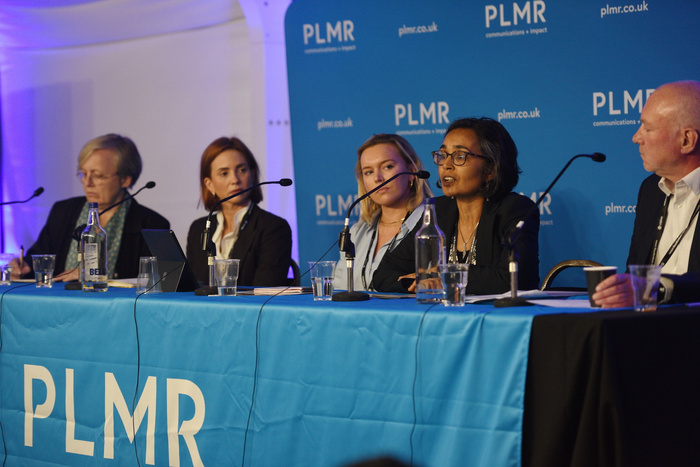
How has your work as Sustainability Lead benefited your own professional development or perspective as a clinician?
The role has broadened my perspective considerably. It has encouraged me to think beyond individual patient encounters and consider the wider systems within which healthcare operates. Sustainability requires us to examine how resources are used, how services are designed and how healthcare interacts with society and the environment.
It has also reinforced the importance of prevention and value-based care. As clinicians, we naturally focus on delivering the best possible outcomes for our patients. Sustainability highlights that achieving those outcomes efficiently and equitably is equally important.
Looking ahead, what are your hopes for the future of sustainable pathology practice over the next 5–10 years?
My hope is that sustainability becomes fully embedded within routine pathology practice, in much the same way that quality improvement and patient safety are today.
Over the next decade, I would like to see sustainability considered in all major decisions relating to pathology services, including procurement, laboratory design, equipment selection, workforce planning, digital innovation and clinical pathways. I would also like to see greater measurement and reporting of environmental impacts so that organisations can identify opportunities for improvement and monitor progress.
Education will be critical to achieving this. I believe future generations of pathology professionals should view sustainability as a core professional responsibility and have the knowledge and skills needed to contribute effectively.
Ultimately, I hope we can demonstrate that pathology services can be environmentally sustainable, clinically excellent and economically efficient simultaneously. These goals are complementary rather than competing.
Finally, on World Environment Day, what message would you like pathology professionals and College members to take away about the role they can play in creating a more sustainable future?
My message would be that everyone has a role to play, regardless of specialty, seniority or workplace setting.
The challenges posed by climate change and environmental degradation can sometimes feel overwhelming, but meaningful change is achieved through collective action. Small improvements implemented consistently across pathology services can have a substantial cumulative impact.
On World Environment Day, I would encourage colleagues to consider 1 action they can take. This could include questioning an unnecessary test, switching off unused equipment, including sustainability in education and training, choosing more plant-based meals or walking and cycling rather than driving. Collectively, those actions can help create a healthier, fairer and more sustainable future for all.
A huge thank you to Dr Shireen Kassam for her continued dedication to championing sustainability in pathology. To learn more about her work in this area, you can read her January 2025 Bulletin article here.
Dr Kassam is also presenting a webinar today on the College's Infection Community (IC) on practicing sustainable healthcare. If you are a College member specialising in microbiology, virology or infection, and don't yet have access to the IC, please contact us to get signed up.
If you would like to support us in advancing the profession, there are many ways to get involved across a huge range of College activities.
If you have any questions on our member spotlights, or have an idea for a blog you’d like to write, please get in touch with the Member Engagement and Support team.
Author(s)
