- Published:
- 20 July 2026
- Author:
- Professor Cheng-Hock Toh CBE
- Read time:
- 5 Mins
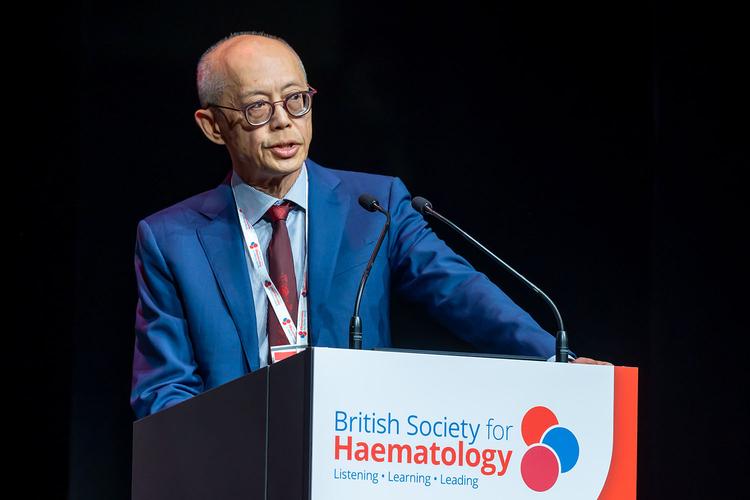
This year's Medal Lecture was structured around 3 core themes. First, that haematology sits at the very heart of medicine. Second, that acquired coagulation abnormalities in any patient invariably worsen outcome. And third, that pathology informs physiology and, in doing so, heralds innovations in patient care. From these 3 themes emerges a 4th: the case for medical haematology as a distinct, clinically integrative specialty.
The origins of haematology are deeply rooted in the earliest medical practices. From the microscope to monoclonal antibodies, from the Philadelphia chromosome to gene editing, the field has repeatedly pioneered discoveries that transform care across all of medicine. Haematology has never been a peripheral science and has consistently anticipated new frontiers and continues to anchor medical progress. Despite its relevance to many specialties and different patient care pathways – e.g. anticoagulant stewardship and safe transfusion care – haematology remains largely invisible, seen as a support service rather than a clinical discipline in its own right.
Thrombosis and anticoagulant management issues dominate the haematology service. A key reference point is the evolutionary importance of coagulation in the physiological response to injury. When injury becomes systemic or sustained – as in sepsis, trauma or cancer – there is overspill of this exquisitely controlled process.
Thrombin sits at the centre of this process. In response to injury, the extrinsic and intrinsic pathways merge to induce an explosive burst in thrombin generation. Thrombin is immediately pro-coagulant, converting fibrinogen into clot fibrin. But simultaneously, it controls its own deactivation by stimulating protein C activation, creating a negative, anticoagulant feedback loop. When thrombin generation is excessive and no longer localised, there is consumption of pro-coagulant proteins, which enhances bleeding, alongside reduction in anticoagulant proteins, which predisposes to site-specific thrombosis.
Clinically, this can present with a devastating scenario: underlying microvascular thrombosis but increased bleeding risk. There are vascular-site-specific differences in the regulation of coagulation and inflammatory processes that have disease-specific influences in how disseminated intravascular coagulation might develop. Understanding this complexity is essential to better manage these high-risk patients, especially those on the intensive care unit.
Our work has focused on damage-associated molecular patterns – particularly histones and neutrophil extracellular traps (NETs) – as mediators of this process. When nucleated cells die, they release DNA, chromatin and granular proteins, which amalgamate to form extracellular traps that immobilise invading pathogens and provide a scaffold to promote thrombosis. But NETs also contain toxic enzymes – elastase, myeloperoxidase and histones.
Histones, critical to cell division together with DNA, become extremely toxic when released into the circulation. Their strong charge affinity for anionic phosphate, which normally binds DNA tightly, transfers onto phosphate-rich lipid membranes. High doses cause intracellular calcium surges and cell death through membrane pore formation.
While histones can promote thrombin generation in vivo indirectly via endothelial cell damage and platelet activation, they can also directly assemble prothrombinase by substituting for Factor Va in a phospholipid-independent manner. Unlike classical prothrombinase assembly, which requires an injured cell surface, this mechanism allows thrombin generation to occur in the circulation itself, disseminating to distant vascular beds.
From this work emerges a convergent model of coagulation. This model no longer sees coagulation as a single discrete entity, but as tightly intertwined. Coagulation is not just engaged in two-way crosstalk with inflammation, but is coupled with innate immune activation and inflammation. This model does not discard the classical cascade or cell-based models of coagulation but incorporates them within a broader framework. The pathology has helped us understand that normal haemostasis, i.e. clot formation, does not only prevent blood loss but also neutralises pathogens. This convergent model forms the molecular backbone of the many medical conditions that cause heightened thrombosis risk, especially in patients with multiple morbidities.
This brings me to my final and most practical theme. Despite the central role of blood in medicine, haematology has become divided. On one side: haemato-oncology – visible, well-resourced, attractive. On the other: a vast spectrum of life-threatening conditions – sickle cell, haemophilia, thrombotic thrombocytopaenic purpura, obstetric haemorrhage – lumped together under the misleading label of ‘non-malignant’ haematology.
This term is actively harmful. It devalues conditions with mortality as high as many cancers. The lack of a clinically resonant identity deters trainees – in the United States (US), only 4–5% of haematology trainees express interest in non-malignant disciplines, and UK trainees choosing a career outside haematology oncology is down by a third. This starves research – 85% of haematology research funding targets malignant conditions, despite non-malignant disorders affecting billions.1–4
The formal adoption of medical haematology – now endorsed by the British Society for Haematology – addresses this directly. Not ‘classical’, which is favoured by the US and honours tradition but looks backwards; not ‘non-malignant’, defined by negation; but medical. This is the haematology that manages complex, life-threatening conditions; integrates with cardiology, obstetrics, surgery and intensive care; leads hospital-wide systems including anticoagulation and transfusion; and sits at the bedside, not just the bench.
The term medical haematology also has precedents, as in medical microbiology and medical oncology. It can better signify its progressive, frontline contributions to all patients – especially those with multiple morbidities.
Concretely, this means establishing blood teams – multidisciplinary groups led by haematologists, conducting daily or virtual ward rounds focused on anticoagulation stewardship, transfusion appropriateness, anaemia management and perioperative risk. It means modernising training curricula to include structured exposure to thrombosis, haemostasis and obstetric haematology. It means championing research equity. And it means embracing genomic and computational innovation as core competencies.
By reclaiming its position at the heart of clinical care, haematology can again be recognised for what it has always been: a discipline that illuminates the mechanisms of life, unites science and practice, and saves lives across many corners of medicine. It is not haematology in medicine that we should be discussing – but medicine in haematology.
References available on our website.
Meet the author
-

Professor Cheng-Hock Toh CBE FRCPath, FRCP, MD
Professor of Medical Haematology, University of Liverpool and NHS University Hospitals of Liverpool Group
Read next