- Published:
- 20 July 2026
- Author:
- Professor Angharad Davies
- Read time:
- 4 Mins
It’s been a very busy couple of months.
June saw the RCPath Awards presentations and I had the privilege of meeting some of the very impressive award winners – more on these in the next Bulletin. I spent last weekend deep in the beautiful Welsh countryside, running a medical school residential for 6th formers; then it was back to London for an Association of Clinical Pathologists infection workforce meeting, where College Vice-President for Workforce and Corporate Engagement, Professor Peter Johnston shared progress on the College workforce strategy.
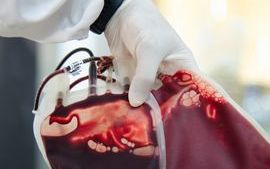
Our collection of themed articles for this issue looks at advances in transplant and transfusion medicine, also with a thought-provoking contribution from Professor Cheng Hock-Toh, who makes the case for medical haematology as a distinct, clinically integrative specialty. Professor Renata Gomes, Chief Scientific Officer of NHS Blood and Transplant introduces the theme for us.
Meanwhile, few of us can have escaped the record-breaking heat last month, which was another reminder, if any were needed, of the threat from our changing climate. Climate change is already shaping patterns of disease, worsening health inequalities and placing increasing strain on healthcare systems. The College has published a new Green Toolkit: find out more from Dr Shireen Kassam, the College’s Sustainability Lead for Pathology Practice.
Returning to workforce, Dr Tim Sloan explores the trends in demand for clinical microbiology advice and patient complexity since the COVID-19 pandemic, underlining the need to recognise this ‘new normal’ to meet the evolving requirements of modern clinical care.
Key to such patient care is the need to embed clinical research and innovation, and pathologist input to this is vital. The Pathological Society has formed a new subcommittee dedicated to clinical trials in pathology, advocating for pathology’s involvement. The team describes how it is working to foster the next generation of trials pathologists.
Regarding innovation, we report on the College’s second Industry Leaders’ Forum, held at the College and bringing stakeholders together to explore potential areas of collaboration and alignment between industry and the profession. Another key component of the College’s corporate engagement strategy is delivering joint educational programmes with industry, to support pathologists; most recently hosting a series of webinars with bioMérieux.
On the education front, I’m sure we have all sometimes racked our brains for new ways to liven up our teaching to engage students. Professor Simon Cross has taken the novel approach of creating cartoons to illustrate concepts – he has shared some examples and written a handy ‘how-to’ guide for Bulletin readers. Also on education, the Pathology Portal has now reached the milestone of an incredible half-a-million accesses.
Dr Ryan Clark’s trainee section includes information on changes to the FRCPath Part 2 paediatric pathology examination after autumn 2026 from Dr Clair Evans, Chair of the College's specialty advisory committee for Perinatal and Paediatric Pathology; an article from Dr Ryan Clark and Dr Tomoko Iwata on the developing landscape of pathology education and educational research; and a report from Dr Phil Hamilton and Dr Josh Dale on the recent UK Cardiac Pathology Network meeting, which trainees were able to attend free of charge. Discover who this year’s trainee research medal winners were and read trainees’ reviews of Diagnostic Pathology: Familial Cancer Syndromes, 3rd Edition and Haematopathology, 4th edition.
Our new series of patient perspectives continues with Dr John Baxter, who explains how his experience as a rhabdoid meningioma patient eventually led to a career in pathology. We also feature a number of profiles of those taking up new College roles: President-Elect Professor Sarah Coupland, Wales Regional Council Chair Dr Emma Short and Northen Ireland Council Chair Dr Alison Wyatt tell us a little about their backgrounds and outline their priorities for their respective roles. Dr Sophie Wallace introduces us England’s first female forensic pathologist, Dr Joan Horder, and we carry appreciations of the work of two giants of pathology, virologist Professor Robert (Robin) Anthony Weiss and clinical toxicologist Professor Robert (Bob) Flanagan.
It’s never too early to think about possible public engagement events for National Pathology Week, which will run from 2 to 8 November and will have the friendly-sounding theme ‘Welcome to the Lab’. There’s a preview here – so thinking caps on!
I do hope you all manage to keep cool this summer and find some time to recharge. As ever, if you have suggestions for Bulletin articles or issues you’d like to see covered, please get in touch – I’d be delighted to hear from you.
Meet the author
-

Professor Angharad Davies
Clinical Director of Publishing and Engagement