
I lead the Master of Medical Education programme at the University of Sunderland and teach with Senior Lecturer, Mr Michael Atkinson, who has a background in philosophy. We teach a very practical course with a particular focus on teaching in the clinical workplace.
It is a complex, pressurised environment where time to think can be short, never mind the time to focus on teaching or supervision. We want to teach our learners how to get the most from every single patient encounter in terms of their own student’s learning as well as the clinical requirements. The balance of service and training.
I will always tell people I don’t do mindfulness, if someone tried to get me to sit in a room with Tibetan chants and dinging singing bowls I would be out of there quicker than you could see me move
We talk about patient encounters so often in medicine, the art of the consultation, the dance of difficult conversation and the balance of service versus training. Every consultation demands your undivided attention, your emotional openness and the ability to form deep connection to people you have only just met. It is actually quite an ask of most physicians - people have to learn how to do it well and be willing to have all these encounters.
What struck us during a recent teaching session was that we don’t always teach people how to move on, how to cope, how to balance all that uncertainty and be able to move onto the next patient or even just go home to the family. We accidentally invented a term for this – ‘unencountering’ - the ability to start afresh with the next person, the ability to be able to sleep that night.
How do we describe ‘unencountering’ and how do we teach it? Is it something deeply personal and indescribable or is it something we should all be more mindful of. For me it has been a learnt skill. I have learnt to move on by wrapping up with clear plans, a discussion of the unresolved and always a “what next”. I have also learnt to take breaks, even if that’s just a toilet trip. My other tool is a cycle home, a time to think on my own, a time to enjoy sky, trees, gravel, the wind, the sun and the rain. They all fix me before I get home.
We are normally surrounded by scientists, by solvers, the doers and fixers and so rarely look at ourselves and rarely take time to just be
When I ask Michael he is much more eloquent than me…
I have often wondered how many healthcare physicians go into a patient encounter completely afresh, with an unwavering full attention, an openness to uncertainty, emotional stability, and with deep awareness of the otherness of another human being. Conversely, how many go into the patient encounter still carrying the residue of the previous encounter; an emotional felt sense in their body and a host of unresolved questions in their mind, unable to engage 100% with their next patient.
What if it was possible to train ourselves to be like the first physician - to ‘unencounter’ each and every time we attend to a patient? To provide an intentionally loaded question, would such a change have a profound effect on patient satisfaction, decision-making, clinical error, job satisfaction and personal wellbeing? Mindfulness may have part of the answer.
Mindfulness is playing an increasing role in healthcare and healthcare education, particularly within the realm of wellbeing and resilience training. However, this emphasis on wellbeing is just part of the picture. Mindfulness is so much more, and has so much potential in all realms of these professions. In fact it can wrap itself around every moment, every skill, every interaction - bringing presence, curiosity and kindness to each and every act.
Mindfulness can also help us detach, let go, release - to hang more loosely with life and all of its challenges, whilst at the time not reducing the seriousness or gravity of any given situation. It can help us diffuse from the most negative thought patterns and embrace the most difficult emotions with self-compassion and acceptance.
So how can we ‘unencounter’ in a mindful way? Firstly, mindfulness meditation is a method that invites us to pay close attention to our physical, emotional and cognitive landscape, as well as our sense experience more generally. It trains us in interoceptive and situational awareness, allowing us to increasingly fine tune our attention to what is occurring in any given moment. By doing so, it allows us to notice residual attachments - typically felt in the body and recognised in though patterns – let them be (by applying the mindful qualities of non-judgement and self-kindness) and let them go. By holding our experience in such an awareness, we can learn to take a pause between encounters and then choose how we respond in the next moment. Thus we are able to bring what is often referred to as ‘beginner’s mind’ into our next encounter, allowing us to see each moment, each patient with a fresh perspective, free from the niggling doubts and self-criticisms that may have previously impacted our ability to practice in skilful ways.
As he always does, he makes me think and reflect. The different perspective of a philosopher and mindfulness coach is refreshing in medicine. We are normally surrounded by scientists, by solvers, the doers and fixers and so rarely look at ourselves and rarely take time to just be. I will always tell people I don’t do mindfulness, if someone tried to get me to sit in a room with Tibetan chants and dinging singing bowls I would be out of there quicker than you could see me move. What I do however is my own version - the cycle home, these blogs and the conversations I have with my clinical colleagues, which now includes Michael.
I really recommend that people should write, with a pen. I really recommend that people exercise, eat properly and just somehow, somewhere spend a few minutes every day on their own. You need that refuel, the top up to be able to deal with the emotions you feel and find in all the people you meet. You need to be able to ‘unencounter’.
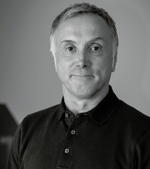
Michael Atkinson is a Senior Lecturer in Medical Education at the University of Sunderland, Co-Chair of ASME’s Mindfulness in Medical Education (MiME) Special Interest Group, and a British Association of Mindfulness-Based Approaches (BAMBA) registered mindfulness teacher.
Author(s)

Dr Chris Tiplady
