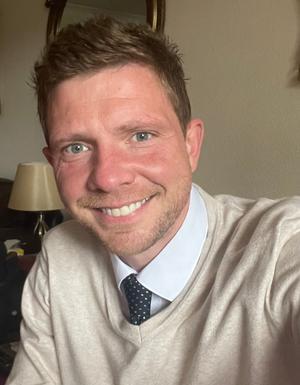
You’ve recently been appointed as a consultant, congratulations! Can you tell us a bit about your journey to this point?
I first started medical school in 2005 and so to finally reach the end of my specialist training 20 years later was extremely satisfying, and somewhat of a relief! I think many colleagues were beginning to think I was an eternal trainee, and I was certainly very conscious that I was one of the oldest.
My journey has been long and varied, with lots of different obstacles and opportunities along the way that have helped prepare me for becoming a consultant. While many residents are in a rush to finish their training, and for good reasons, the length of time I’ve taken has never been a problem for me. In fact, it has been quite the opposite. I’m excited about this next stage, if a little apprehensive. Reaching the point of being appointed has been challenging to navigate and I’d like to share some of my experiences.
Make the decision that is right for you and not based on ‘people pleasing’.
What does the recruitment process involve?
It is not always clear where vacant positions are going to be, particularly for smaller specialties like neuropathology; these tend to be advertised when senior residents start looking for jobs. Therefore, it is important for you to have conversations within the specialty at an early stage. Meetings and conferences are fantastic networking opportunities for initiating conversations about future options.
When you decide on particular avenues you would like to pursue, more robust conversations can begin and logistical elements can start to be put into place. For new posts in particular, business cases will need to be discussed, developed and approved and this can take time. For me, serious conversations about where I might work started as I approached my final exams. I was interested in working in several centres and recommend visiting the departments to have a look around.
Make the decision that is right for you and not based on ‘people pleasing’. By being respectful and maintaining good communication along the journey, negative feelings can be avoided. Everyone appreciates the magnitude of this decision, so take the time you need to find the best choice for yourself.
Once you’ve made a decision, you will need to apply for the post, usually online. The application requires details about your training, along with some white-space questions about your qualities, experience and what you bring to the role. Training courses can help you prepare for the interview but always speak to colleagues who have gone through this before; their perspective and experience can be very valuable. The interview is an important opportunity to sell yourself and why you would be a great addition to the team. Research the trust’s values and consider speaking to some of the management team in advance of the interview. This not only shows your interest, but is a chance for you hear about their perspectives on the future of the department and for them to get to know you better.
Keep in mind when your CCT is and ensure that you have your ‘outcome 6’ from your ARCP as this is required to receive your CCT and to become a member of the Specialist Register with the GMC. This process can take longer than expected so take the necessary steps as early as possible to prevent any delay to your start date.
Preparing for life as a consultant starts on the first day of training.
When did you start thinking about a consultant role, and what do you need to be thinking about early in your career to help you make the transition to become a consultant?
Preparing for life as a consultant starts on the first day of training. As you progress through the different stages, you take on different tasks and responsibilities that put you on the pathway to independent practice. It’s important to think early on about the type of consultant you want to be – whether you are interested in particular subspecialties or would prefer to be a generalist, and whether you want teaching, research, leadership and management to feature prominently within a future role. You also need to consider geographical location as this will help shape discussions with departments you are interested in. It is useful to have early conversations about future opportunities – if there might not be any available jobs when you are ready to apply, you can rule it out at an early stage and focus on opportunities elsewhere.
Traditionally, the consultant post you take is seen as the one you’ll remain in for the duration of your career, and this provides a certain stability. However, it is becoming increasingly common that your first consultant job won’t be the one you retire from. It’s important to stay vigilant for other opportunities that may appear and appeal to you at different stages of your career.
Remember that you don’t have to become a consultant – you could work as a specialty, associate specialist and specialist (SAS) doctor. If becoming a consultant isn’t the best option for you, it’s worth discussing other options with the departments that are in your scope.
Your training programme is designed to help you reach the stage where you are competent to work as a consultant, with the exams confirming that you have attained the required knowledge and experience. As a consultant, you will still effectively be a trainee (we can never know everything!) and will continue to learn through challenging cases. As you become more senior, you will become very aware of what you confidently know, what you don’t know, your particular limitations and how to deal with cases you are unsure about. When reviewing a case as a trainee, always ask yourself, “What would I do next if this was my case?”, and check this with your supervisor.
Being a consultant does not mean you can’t ask for help; having supportive colleagues around is vital no matter what stage you are at and it is particularly useful at times of transition like this. Mentors have been a huge help to me throughout this process and I highly recommend engaging with colleagues. These are people who likely know you very well, can provide an objective view on the different options you are exploring and provide a sounding board for any queries or questions you have.
I would advise that you engage with independent reporting whenever possible. As an ST2 trainee, I was able to independently report appendix and gallbladder specimens. It is a skill to be able to trust your interpretation of a case and click the ‘authorise’ button, knowing that no one else has seen the case. It is also vital in helping you understand your limitations, recognise when to ask for help, develop your independence and trust your judgement.
After completing FRCPath Part 2, I spent my time effectively working as part of the consultant team and signing out cases. This meant that when I officially became a consultant, my role didn’t change significantly and I continued to work on the current trajectory. This helped to ease the transition and reduce any associated anxiety. Leading MDT meetings was an important part of this journey. Being responsible for discussing particularly challenging cases with colleagues allowed me to build confidence and experience, and highlighted my readiness to be an active member of the team.
How important is networking and visibility in this process?
Networking is not something that I have ever found easy. I have always been shy, so spontaneously walking up to people and introducing myself is difficult. However, it is also something that is needed when working in the research setting and I have pushed myself to become better at it. Nothing ventured, nothing gained! If you also struggle with networking, try changing your perspective: when someone approaches me to introduce themselves and chat, I am always very happy and receptive to this. It should be no different when you do it with other people.
It is important to be able to ‘sell yourself’ in conversations, something I’ve never felt comfortable with. However, being aware of your qualities and what you might bring to a future role are important – it helps others to get to know you better, understand your skills and abilities, and see why you would be a fantastic colleague to work with.
Reaching the end of training is a time to celebrate a significant landmark in your career. However, deciding on your first job can be a very complex and challenging process. Remember, nothing is permanent. If it doesn’t work out as you hoped, you can always change direction. There will be plenty of other opportunities and jobs to explore.
Read more about preparing to be a new consultant, and hear from Claire Deakin, Chair of the New Consultants’ Committee.
Author(s)
