

RCPath Science Communication Prize
What is the Science Communication Prize?
The Royal College of Pathologists Science Communication Prize is kindly sponsored by Sonic Healthcare UK. It is an award given to a pathology trainee, foundation doctor or undergraduate who has shown excellence in their science communication activities throughout the year. The prizes aim to:
- cultivate awareness among pathology trainees, foundation doctors and undergraduates about the importance of public engagement
- reward and recognise trainees, foundation doctors and undergraduates who have undertaken sustained high-quality science communication activities.
There are 2 prizes, one for each of the following categories:
- Trainee category - UK pathology trainees
- Undergraduate category - UK undergraduates and foundation doctors (this includes all biological science, veterinary science or medical students and FY1/FY2 doctors).
Each winner in the trainee and undergraduate category will receive £500 and be invited to accept a certificate at the College's New Fellows Ceremony, which will be awarded by representatives of Sonic Healthcare UK. An interview with the winner will be posted on the College website.
Judging process
The decision on the Science Communication Prize winner will be made by a selection committee comprising the Vice President for Communications, Clinical Director for Publishing and Engagement and a member of the public engagement team. Selection by the committee will be based on evidence of a sustained commitment to high quality public engagement activities – further information is in the Guidance for applicants document below.
About our sponsor: Sonic Healthcare UK

The Science Communication Prize's sponsor, Sonic Healthcare UK, are leaders in consultant-led diagnostics, innovation, value, and long-term investment in private and NHS healthcare provision.
Sonic Healthcare UK includes The Doctors Laboratory (TDL) and Health Services Laboratories (HSL) which is a joint venture with UCLH and the Royal Free Hospitals Group. The Doctors Laboratory has over 30 years’ experience in UK pathology and have been working in partnership with the NHS for over 20 years.
Sonic Healthcare UK is part of the Sonic Healthcare group, one of the world’s largest clinical diagnostics groups with a demonstrated track record of medical excellence. Find out more at www.sonichealthcare.co.uk.
2026 winners
Our 2026 winners are Dr Sophie-Rose Ekitok and Dr Stephen Hibbs, who will both be awarded £500 thanks to the generous sponsorship of Sonic Healthcare UK.
Interview with Sophie-Rose Ekitok, winner of the Undergraduate category

If there is a topic you care about, this competition is a great opportunity to raise awareness of an issue that's important to you and contribute to conversations within healthcare. You do not need to be an expert or have lots of spare time.
How do you feel about winning this year’s RCPath Science Communication Prize?
I was genuinely surprised and incredibly honoured to win this year's RCPath Science Communication Prize. It means a great deal knowing that the judges found my contribution to a local Deaf community meaningful and valuable. This project came from a passion for improving communication and healthcare accessibility so having that work recognised is both humbling and encouraging. I am very grateful for the opportunity and proud that an issue I care deeply about has been given a wider platform.
Why did you enter this year's competition?
I entered the competition because I am passionate about reducing health inequalities and improving access to healthcare, particularly for Deaf patients. Effective communication is essential for safe and compassionate care, yet many Deaf patients still face barriers when accessing healthcare services. I saw this competition as an opportunity to raise awareness among medical colleagues and highlight the importance of creating a more inclusive healthcare system. It was also a chance to advocate for positive change and encourage conversations that can help improve patients' experiences.
What would you say to anyone who is considering entering this competition?
I would wholeheartedly encourage anyone thinking about entering to go for it. When I submitted my project I was a foundation year two doctor, working full-time, and this was something I completed alongside my clinical commitments. I never expected it to receive this level of recognition, which made the experience even more special. If there is a topic you care about, this competition is a great opportunity to raise awareness of an issue that's important to you and contribute to conversations within healthcare. You do not need to be an expert or have lots of spare time. I was genuinely surprised by the outcome and it showed me that even a small project can have a meaningful impact and be recognised by others.
Interview with Dr Stephen Hibbs, winner of the Trainee category
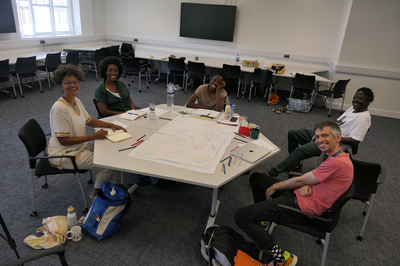
How do you feel about winning this year’s RCPath Science Communication Prize?
I am very grateful that our work in the Sickle Cell Theatre Collective has been recognised in this way. Being involved in the theatre collective and producing Crescent Cell, Sickle Moon has been one of the most transformative experiences of my career. I had the opportunity to co-create the production with an incredible group of creative professionals, including people living with sickle cell. Drawing on lived experience and ethnographic research from the Exploring Practices of Care during Sickle Cell Crises (EPOC4) study, we created a theatre production that illuminates pain, trust, race and care. I am grateful to everyone who was involved in the research study and in every part of the theatre production. I’m proud that the award recognises what we created together.
I hope this recognition will help us build partnerships for that next chapter, and the prize money will contribute towards it. I also hope our experience encourages other healthcare staff to explore what creative collaboration can make possible.
Why did you enter this year's competition?
I entered this year’s competition to spread the word about this remarkable production and the collaboration behind it. Nearly 1500 people saw the play across 21 performances in Liverpool and London in 2026, and our hope is that this is just the beginning. We want to take the play to new places and audiences, share experiences that are too rarely represented on stage, and use it to catalyse better care. I hope this recognition will help us build partnerships for that next chapter, and the prize money will contribute towards it. I also hope our experience encourages other healthcare staff to explore what creative collaboration can make possible.
What would you say to anyone who is considering entering this competition?
Go for it. There is so much good work out there to be done in science communication. Notice what you are passionate about changing, and find allies who bring different knowledge and creative skills. Listen carefully to the people whose experiences are at the heart of the work and involve them in shaping it from the beginning. Be willing to let the collaboration change your own assumptions. And embrace ways of communicating that go beyond the formats we are used to within medicine.