
You’re several weeks into your new role now, how has it been?
I officially started my post as a clinician scientist and consultant paediatric neuropathologist on the 5 January 2026. HR-related challenges had been long and, at times, frustrating, but I had already effectively been working as part of the consultant team for the previous 12 months, so the day I formally began my consultant role, nothing really changed. This made the transition far easier for me and the lab, and neuro-oncology and neurosurgical teams didn’t know anything was different. I recommend aiming for this as you transition into your consultant role.
During my first week as a consultant, I was covering the clinical service. I had effectively done this many times before, but as always, it presented me with a few challenges; my new status triggered a change to my login account, so I was unable to access the systems without several phone calls. There were several emergency intraoperative cases that were a challenge to manage independently. Advising the clinical teams regarding what they needed to do with the tissue from a brain biopsy sample, among a busy case list, proved difficult. But I survived, and you will too.
The main lessons were: stay calm so you can think clearly, and know where your support is should you need it. Each week brings new experiences, unexpected challenges and positive moments that keep you moving forwards. And when things go wrong, don’t beat yourself up about it. Reflect, speak to colleagues (who will inevitably have had the same thing happen) and keep looking ahead.
What additional responsibilities do you have, both to your patients and within the wider hospital environment?
During training, it’s easy to focus mostly on case reporting; however, the consultant’s role is far broader. These other aspects add diversity to the role, but also require careful management.
One major responsibility is training others. I’ve always loved teaching throughout my career, whether its one-to-one at a microscope, in small groups or through lectures. As a resident or trainee, you present your interpretation of a case to the consultant who then decides whether they agree, advises what the next steps should be and provides feedback. However, doing this as a consultant is far from easy. It requires confidence in your own interpretive skills and early on you may find supervising others in their training challenging until you feel more secure and experienced. Different views and opinions may be expressed that challenge your interpretation, but this mirrors the clinical setting of a multidisciplinary team (MDT) meeting or the interpretation of an intraoperative sample, providing valuable learning opportunities for everyone.
I hugely respect colleagues who are happy to admit when they don’t know something and use it as a learning opportunity for everyone.
Teaching and training benefit me as a pathologist. To teach effectively, you need to continually expand your knowledge with updated research outputs or clinical protocols. However, you will never be able to know everything. Questions from training sessions may lead to your own learning and development too. This does not mean you are a bad pathologist. I hugely respect colleagues who are happy to admit when they don’t know something and use it as a learning opportunity for everyone.
You will receive increased invitations to different committees and meetings, both within your department and across the hospital. These can help you understand the hospital set-up and current challenges facing the trust and individual departments. Increased involvement in leadership and management responsibilities may be something you wish to develop as part of your career; however, these activities do require protected time. Within our department, we have specific afternoons timetabled for such work to ensure it is not taken away by clinical work demands that are always pressing.
Remember, we are all human beings and are working towards the same objective.
MDT meetings will likely be a key part of your week. Previously, I had a colleague in the meetings alongside me, which was reassuring; now it’s just me. It has taken some adjustment and I will always have some anxiety associated with presenting cases, but it is vital for your development as a pathologist, for integrating into the team and for strengthening relationships with colleagues. Remember, we are all human beings and are working towards the same objective.
Clinical governance, including audits and research, remains an important part of your consultant role, ensuring that you provide the highest quality care to patients. For example, each month, one consultant neuropathologist audits the previous month’s cases reported across the different domains against set standards. This ensures compliance and quality, and identifies any changes in practice required or missing items in reports.
Your inbox will be constantly full – something I was used to as a resident. Clinical queries will continually arrive. It is important to not let this invade both your working life and personal life. Switching off email notifications when reporting can minimise distractions, and setting ‘out of office’ messages, which can be a challenging thing to put in place for some (including me!), can ensure you are well rested when you are away from work. When I’m away, as a compromise, I allow myself 30 minutes each day to check for urgent requests. But prioritising your health and wellbeing is essential and something you need to be mindful of.
You may encounter other responsibilities, such as appraisals and continuing professional development (CPD). Balancing all these additional responsibilities is crucial. A colleague gave me a helpful analogy; as a new consultant, you will have a wheelbarrow that you are pushing forward on a daily basis. When you start the job, it will be empty, which will make this easy to do. Things of different sizes and weights will start being added to this wheelbarrow, which will make the wheelbarrow more difficult to push and keep balanced. It is important that we don’t let the wheelbarrow become overfull, otherwise you won’t be able to push it anymore and it may lose balance and fall over.
We all want to do the best job we can, but taking on too much, even when we are trying to help, makes this impossible. It may be better for someone else to take that task on. Falling short of your best can feel demoralising and unpleasant, but choosing tasks and responsibilities that are achievable and you enjoy will ensure you keep the wheelbarrow balanced and keep it moving forwards. You are the gatekeeper of your wheelbarrow, and this analogy holds true at every stage of your training or experience.
Work−life balance is just as important as a consultant as at any stage of your career, but recognising its importance and maintaining it is often the hardest part.
What about the changes to work−life balance?
Work−life balance is just as important as a consultant as at any stage of your career, but recognising its importance and maintaining it is often the hardest part. It is inevitable that some clinical cases will play on your mind.
At Great Ormond Street, we frequently encounter brain tumours that don’t behave according to the textbooks and deciphering what they are can prove very challenging, particularly when different forms of treatment may hinge on your decision. It’s easy to take those cases home with you, preventing you from switching off properly. When I encounter a case like this, I instinctively ask a colleague for their thoughts. We now have a weekly review team meeting where we can bring any case for discussion and advice. A problem shared is a problem halved as they say.
A split post is particularly challenging in terms of booking annual leave. There is an instinct to book your leave on the weeks when there is no clinical commitment, which should in theory be those allotted to research time. However, this can very easily create an imbalance. I now portion my time daily rather than working in blocks (i.e. whole weeks); each day I have a particular slot for protected clinical work/reporting and another slot for research-related jobs. This means taking annual leave in any given week does not detrimentally impact any aspect of my work.
I have not been good at doing this so far, but planning your annual leave for the year in advance of your rota allocations being issued can be beneficial, with some flexibility needed for unexpected needs. Irrespective of how you manage your work, there are going to be stressful periods and days where you wonder why you are doing this role, but having time off booked in your diary gives you something to look forward to and might be the boost you need during difficult times. Otherwise, it is very easy for things to start looking bleak. I have also started keeping a list of all the things I would like to do or see at some point in my life, so I can use my leave to put these into action.
Making time for hobbies that allow you to completely separate from work is important too. Ever since I was little, I have always loved nature, wildlife and in particular bird watching. Most weekends I am out at some point with my binoculars. Being outside in the countryside provides some escapism and time away from being a neuropathologist. I’ve already booked a week-long falconry course in March, which I am very excited about, and hope to take an international bird/nature watching trip later in the year. I also love history, museums, visiting National Trust or English Heritage sites and reading – all of which help me to switch off.
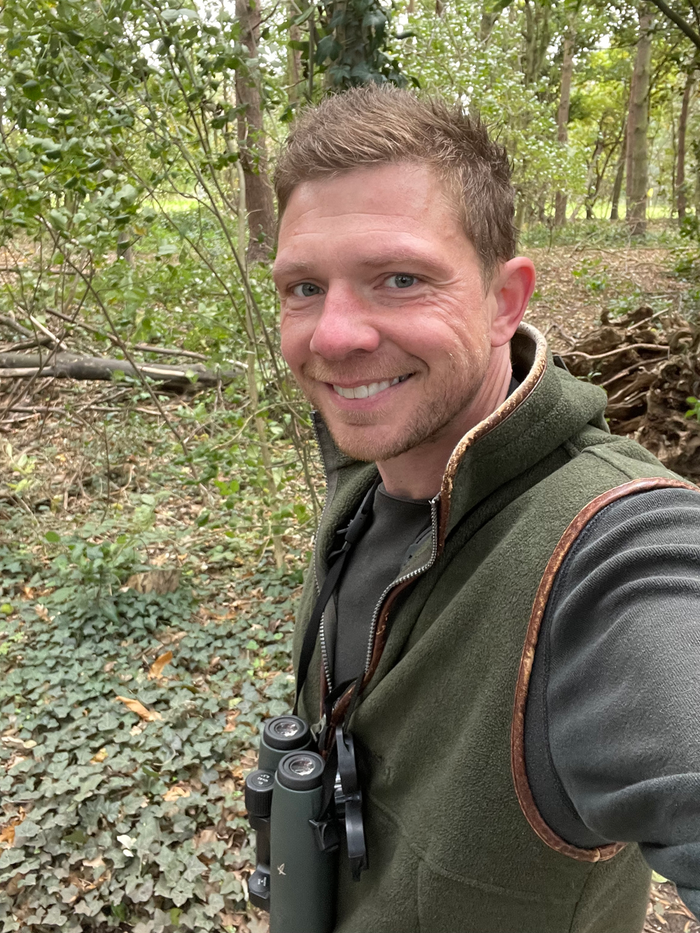
Finding your own form of escapism is important, and making time for this is also part of your job as a consultant. It can easily be sidelined or forgotten but it’s part of being effective in your job and sets an important example to those following you.
What do you wish that someone had told you about becoming, or being, a consultant?
I feel fortunate to have been surrounded by supportive mentors and colleagues whose advice prepared me for the transition and prevented any major shocks. We will all go through different transitions throughout both our personal lives and our careers. They can be challenging to navigate, but you will come out the other side with more knowledge and experience to share with others. Every consultant has been through this and has stories that they will remember − don’t be afraid to ask about them or share your own with future generations. We’re all human beings and mistakes happen; we only learn from them by being open, honest and sharing them. Don’t ever be afraid to ask for help; it’s expected of a new consultant and your colleagues should understand that. You may only need some reassurance, but when you have that, you can build your confidence and go from strength to strength.
It is not always going to be rosy. There will be days when systems fail, there has been a power shutdown and now your microscope doesn’t work, the scanned slides for an urgent case haven’t been uploaded, the MDT unexpectedly announce they want you to review 3 extra cases in the meeting on the spot, there is an unexpected visitor who is expecting some teaching from you during a busy week, or there is an issue in the lab with a case that you need to try and sort out, to name a few. When that happens, take a deep breath, don’t panic, take a step back, think logically and ask yourself what you would advise someone else to do in a similar situation. Hopefully you will find some clarity of thought.
So there isn’t one particular thing I wish I had been told, but it is worth repeating that you should never be afraid to ask for help or reach out for support if you feel you are struggling. And be vigilant of your colleagues around you too; if something doesn’t seem quite right, a simple “are you ok?” may be just what they need. You might find it benefits you one day too.
If you missed them, you can read Dr Clarke’s first blog post, about his role as the College’s Undergraduate and Foundation Lead, and his second blog post, about the transition to consultant.
Author(s)
