
Biomarkers and Precision Medicine meeting
Terrace Room, RCPath; 10 September 2026, 13:30 – 17:00 BST
Event programme
Programme
Chairs: Dr Bernie Croal, President, RCPath and Professor Marta Cohen, Vice President for Learning, RCPath
| Time | Session |
|---|---|
| 13:30 | Arrival and registration – refreshments available |
| 14:00 |
Welcome from Dr Bernie Croal, President, RCPath 
|
| 14:45 |
Translating research into patient care Chaired by Professor Marta Cohen, Vice President for Learning, RCPath
|
| 15:30 | Coffee break |
| 16:00 |
Panel discussion on opportunities and barriers in treatment-guiding biomarkers in UK cancer services (chaired and introduced by Dr Bernie Croal, RCPath President) Introduction and context setting from Dr Bernie Croal, RCPath President Panellists:
|
| 17:00 | Close |
Disclaimer: MSD provided sponsorship to support costs of this event, without influencing the agenda or arrangements (other than MSD-specific keynote session).
Please note: Panellists for the final session are subject to change.
Speakers and panellists
Naomi Allen, Chief Scientist, UK Biobank; Professor of Epidemiology, Nuffield Department of Population Health, University of Oxford
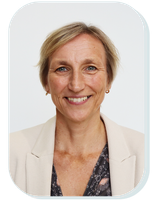
Naomi Allen is Chief Scientist for UK Biobank and Professor of Epidemiology at the Nuffield Department of Population Health, University of Oxford, UK.
Naomi joined the UK Biobank in 2011 as Senior Epidemiologist and in 2019 become Chief Scientist. She is responsible for co-ordinating the linkage of routine electronic health-related records into the study for long-term follow-up and for helping to define the scientific strategy for the introduction of new enhancements.
She has co-authored over 350 publications and has a keen research interest in the role of diet, adiposity, hormones and other biomarkers on cancer risk using large-scale prospective cohort data.
Joseph Burt, Head of Diagnostics and General Medical Devices, MHRA
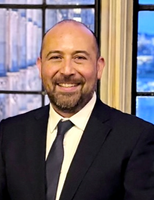
Joseph is an experienced Quality and Regulatory professional who is enthusiastic about delivering innovative, safe and groundbreaking medical devices to the benefit of patients and for use by healthcare practitioners. With over 25 years of experience working in small to global medical device companies, he has developed several in vitro diagnostic medical devices, including the approval of developed devices with multiple regulatory jurisdictions.
He is passionate about bringing positive outcomes through though the use of innovative medical technologies and a champion for early diagnosis for preventative healthcare.
Joseph is the Head of IVD and General Medical Devices with the MHRA.
Dr Bernard Croal, President, RCPath
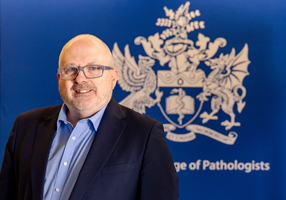
Dr Bernie Croal is an NHS Chemical Pathologist from Aberdeen specialising in intravenous nutritional support. He is a science and medicine graduate, and trained in general medicine, chemical pathology and Health Services/Public Health Research. He has spent a long career in various leadership roles within NHS Scotland including clinical director and regional lead for pathology, NHS Scotland demand optimisation lead and chair of the Scottish Clinical Biochemistry Network (SCBN). He is also a Past President of the Association for Laboratory Medicine. He is a fellow of 3 colleges of physicians and the Institute of Biomedical Science. Within RCPath he has chaired many committees and served as Vice-President from 2011-14 and is now President until November 2026.
Helen Dent, CEO, BIVDA

Helen Dent is Chief Executive of BIVDA with 20+ years’ experience in healthcare, diagnostics, procurement, commercial strategy and policy.
Prior to joining BIVDA, she held senior commercial and supply chain roles at Abbott Laboratories in the UK and Europe, with responsibilities for contracts, strategic pricing, managed services, supplier relationships and business development. She also has significant NHS procurement experience, having worked in national diagnostics procurement for NHS Blood and Transplant, pharmaceutical purchasing and childhood vaccines for the NHS Purchasing and Supply Agency, and pharmacy procurement for Surrey and Sussex Supply Management Confederation.
Helen has a practical understanding of how diagnostics are developed, procured, adopted and embedded within healthcare pathways. She is particularly interested in how the health system can better recognise diagnostics as an enabler of earlier intervention, more efficient care, antimicrobial stewardship, personalised medicine and improved patient outcomes. Her work focuses on helping ensure that innovation in areas such as genomics, infection diagnostics, women’s health, near-patient testing and core laboratory services can move more effectively from evidence and policy ambition into routine clinical use.
Helen is a strong advocate for constructive partnership between industry and the public sector. She works with BIVDA members and external stakeholders to shape policy, improve market access, support proportionate regulation, and promote procurement approaches that recognise value rather than cost alone. She is committed to ensuring that members’ voices are amplified and that the contribution of in vitro diagnostics is understood in the context of NHS productivity, population health and healthcare transformation.
Academically, Helen holds an LLM in Public Procurement Law and Policy from the University of Nottingham and an MSc in Procurement from the University of Glamorgan. She is also a member of the Chartered Institute of Procurement and Supply. These qualifications underpin her expertise in procurement law, commercial governance, contract management and ethical public-sector decision-making.
Dr Shirley Hopper, Expert Medical Assessor, Biological Products, MHRA
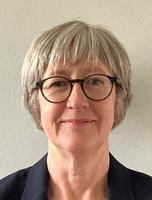
Dr Shirley Hopper is a pharmaceutical physician in the biological medicines unit at the MHRA where she assesses the clinical efficacy and safety aspects of licensing applications, and provides advice to developers on their clinical development plans. She has particular expertise in vaccines and oncology products, and leads on the MHRA's guidance for individualised mRNA cancer immunotherapies (personalised cancer vaccines). Shirley has contributed to European guidance on pharmacogenomics and retains a special interest in biomarkers.
Dr Mike Hubank, Scientific Director, Clinical Genomics, The Royal Marsden; Professor of Translational Genomics, ICR; Scientific Director, NHS England North Thames Genomic Laboratory Hub
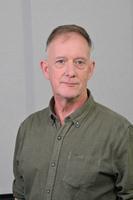
Dr Hubank has worked in Genomics for over 25 years. Following a PhD at UCL, he worked at the University of Sussex and Yale University before returning to the UCL Institute of Child Health in 2000 to found and run UCL Genomics. In 2016 he moved into clinical diagnostics at the Royal Marsden Hospital, London, to lead a translational laboratory focused on the development and clinical application of genomic assays for cancer diagnostics. Since 2018 he has been Scientific Director at the NHS England North Thames Genomic Laboratory Hub.
Mike is a co-lead (with Matt Krebs and Paul Ryves) of the Circulating Biomarkers Network of Excellence. The network focusses on identifying clinical use cases for ctDNA and other liquid biomarkers, connecting a wide range of interested parties, and enabling evidence-based development of testing towards standard of care adoption.
Professor Peter Johnson, National Clinical Director for Cancer, NHSE
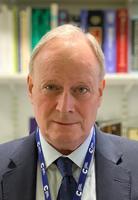
Peter Johnson is Professor of Medical Oncology at the University of Southampton, National Clinical Director for Cancer at NHS England and Chair of the UK Office for Life Sciences Healthcare Cancer Goal. He helped to write the National Cancer Plan for England: Delivering World Class Cancer Care, published in February 2026. He was previously Chief Clinician for Cancer Research UK from 2008 to 2017 and set up the UK’s first dedicated Centre for Cancer Immunology in Southampton. His research interests are in applied immunology and immunotherapy; lymphoma biology and precision medicine, and clinical trials. He has been the Chief Investigator for trials ranging from first in human novel antibody therapies to international randomised studies. He is currently researching novel biomarkers to detect lung cancer, and leads the NHS Cancer Vaccine Launchpad, aimed at accelerating the next generation of cancer immune treatments.
Professor Louise Jones, Professor of Breast Pathology, Queen Mary University of London and Genomics England
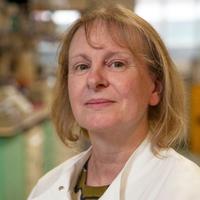
Professor of Breast Pathology, Barts Health NHS Trust and Head of Breast Research Group in Centre for Tumour Biology, Barts Cancer Institute, Queen Mary University of London, with research focus on the role of the microenvironment in mediating progression of DCIS to invasive breast cancer.
Co-Lead and Chief Scientific Officer of PharosAI – translating artificial intelligence on cancer diagnostics into the clinical setting.
Co-PI of the National Breast Cancer Now Biobank which includes the Primary Breast Cell Bank, isolating cell populations from tissues for the research community – established in 2010, now delivering samples internationally to support research.
Lead for Molecular Pathology within Genomics England during the 100,000 Genomes Project then taking on Cellular Pathology Lead for North Thames GLH. She sits on many Genomic Medicine national committees representing Pathology and contributing to discussions around improving sample handling and pathways for genomic testing.
Also Research Lead for the National Breast Pathology Co-Ordinating Committee and Editor-in-Chief of The Journal of Pathology.
A founder for the Patient Advocate Course VOICE (https://www.bci.qmul.ac.uk/about/public-engagement/voice/) which brings patients into this discussion on medicine, management and research.
Professor Tim Kendall, Chair, Pathological Society Clinical Trials Pathology Subcommittee
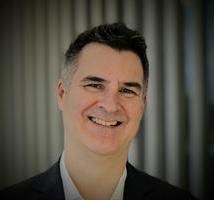
Prof Kendall is Personal Chair of Liver Pathology at the University of Edinburgh and an NHS Lothian Consultant Liver Pathologist at the Royal Infirmary of Edinburgh. His research interests are steatotic liver disease, liver fibrogenesis, and primary liver cancer but he also provides histopathological support for other preclinical, translational, and clinical studies. He is the pathology and ethics lead for SteatoSITE, a national MASLD data commons.
He is chair of the UK Liver Pathology Group and Pathological Society Clinical Trials Pathology subcommittee, and is pathology representative on committees of European and national liver organisations including CCA-UK and the European Network for the Study of Cholangiocarcinoma. Prof Kendall graduated from Southampton University and trained in Southampton and Edinburgh.
Professor Manuel Salto-Tellez, Institute of Cancer Research & Royal Marsden Hospital; Queen’s University Belfast
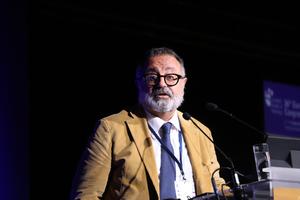
Professor Manuel Salto-Tellez (MD-LMS, FRCPath, FRCPI) is the Chair of Molecular Pathology at Queen’s University Belfast (QUB), a clinical consultant pathologist and the Lead of QUB’s Precision Medicine Centre of Excellence. He is also the Professor on Integrative Pathology at the Institute for Cancer Research in London (ICR), and the lead of the Royal Marsden Hospital / ICR Integrated Pathology Unit. Prof Salto-Tellez studied Medicine in Spain (Oviedo), Germany (Aachen) and The Netherlands (Leiden), in the context of grants from the European Union. He specialised in histopathology in the UK (Edinburgh and London) and in molecular pathology in USA (Philadelphia). For more than 10 years he worked at the National University of Singapore and its National University Hospital, where he was associate professor, senior consultant, and Vice-dean for Research.
Prof Salto-Tellez is author or co-author of more than 330 internationally peer-reviewed articles in translational science, molecular pathology and diagnostics, has published a similar number of abstracts in international conferences, and is editor or contributor to some of the key textbooks of pathology and oncology. Prof Salto-Tellez serves and has served in key committees related to cancer research, at national and international levels, and has generated more than £100 million in competitive grant funding, including major ongoing programmes with UKRI and NIHR. He is scientific adviser to 2 companies in the digital pathology and artificial intelligence space and has been part of most national (and many international) advisory boards organised by pharma and biotech in relation to the introduction of new molecular and tissue-based tests in the UK or globally, over the last 10 years.